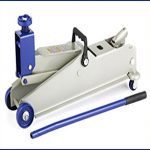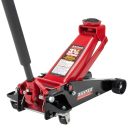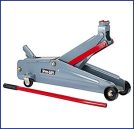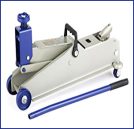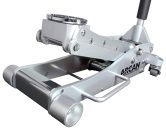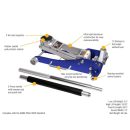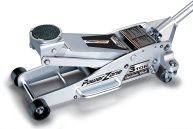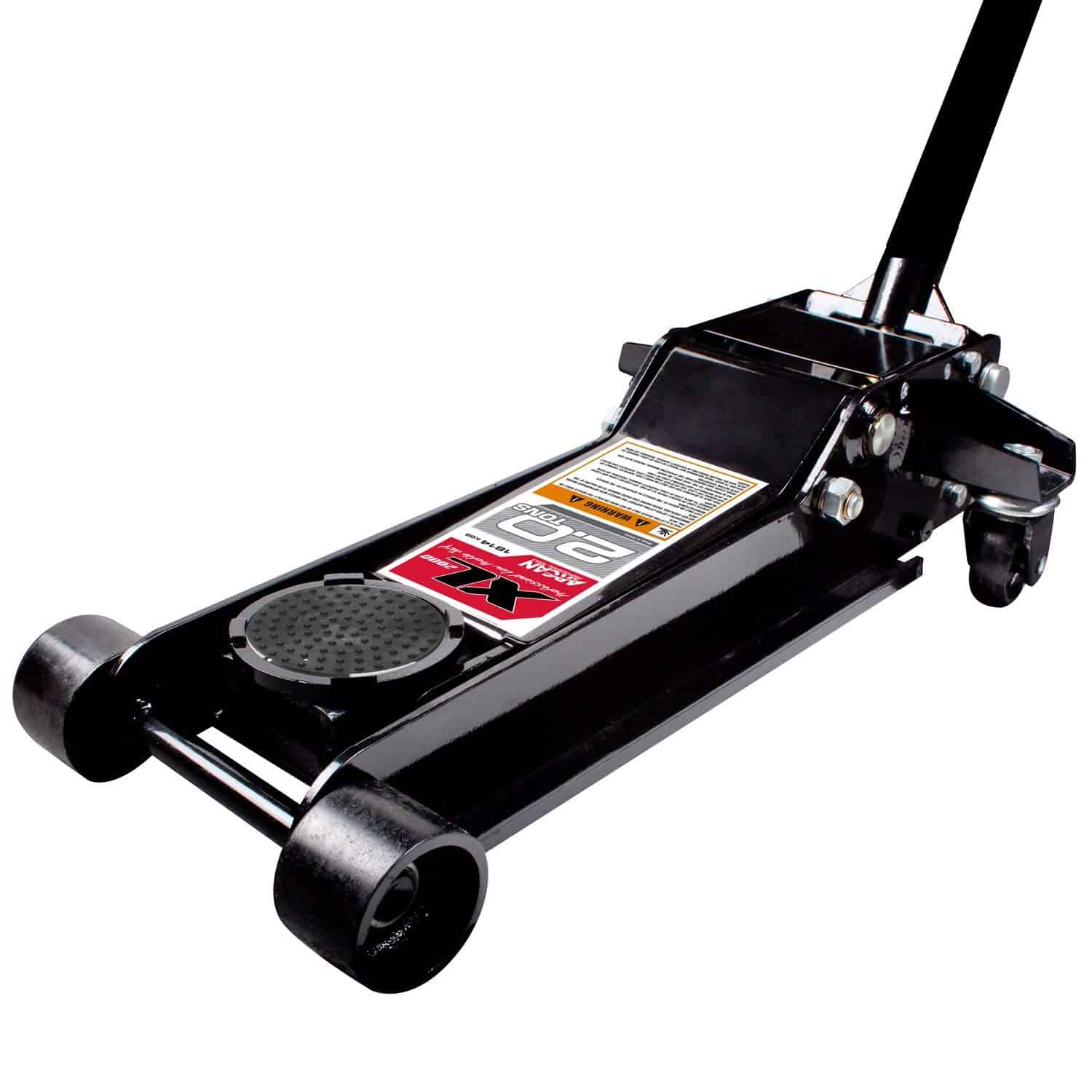
Bottom line: The Arcan XL20 is a 2-ton low-profile steel service jack with a documented 3.5-inch minimum height and 18.1-inch maximum height. Its low entry and 67.2-pound steel build point toward stable garage use rather than frequent carrying. It can be a sensible fit for many cars when the capacity, reach, saddle, and lift range match the approved points, but it is not a stand and should not be treated as a universal truck or SUV jack.
Review method: This page evaluates the model from its manufacturer operating manual and specifications. It does not claim personal hands-on testing. Availability, packaging, replacement parts, and warranty support should be reconfirmed for any used or remaining stock.

Arcan XL20 specifications
| Rated capacity | 2 tons |
|---|---|
| Minimum height | 3.5 inches |
| Maximum height | 18.1 inches |
| Chassis length | 24 inches |
| Overall width | 13 inches |
| Handle length | 45.3 inches |
| Saddle diameter | 4 inches |
| Net weight | 67.2 pounds |
These figures come from the XL20 manual. Do not substitute specifications from the similar-looking XL20B, XL2T, or another Arcan/Blackline model.
Best-fit use cases
- A home garage with a hard, level floor and enough room to roll and store a 67.2-pound jack.
- Cars whose approved lift points are above 3.5 inches and reachable by a 24-inch chassis.
- Jobs requiring enough rise to position stands within an 18.1-inch maximum lift envelope.
- Owners who prefer a substantial steel chassis over a lighter jack carried between locations.
Measure the real lift point—not the bumper or rocker-panel clearance. A low front fascia may block the jack before the saddle reaches a deeper center point. Compare the measurements with our low-profile floor-jack guide.
Fit decision table
| Question | XL20 reference | Reject the fit when |
|---|---|---|
| Can the saddle enter? | 3.5-inch low height | Bodywork blocks the chassis or there is no positioning clearance. |
| Can it reach the point? | 24-inch chassis | The approved center point is too deep to center the saddle safely. |
| Can it place the stands? | 18.1-inch high height | The approved support point needs more lift than the jack can provide. |
| Is capacity adequate? | 2-ton rating | The exact lift application is not comfortably within manufacturer limits. |
| Will it be transported often? | 67.2-pound net weight | The user cannot load, unload, or secure it safely. |
Strengths
Useful low-profile range
A 3.5-inch minimum covers many low-clearance car applications, while 18.1 inches of maximum lift offers more stand-placement range than a very compact racing jack. The actual usable range still depends on saddle compression, adapter thickness, suspension travel, and the point being lifted.
Garage-oriented stability
The steel construction and 67.2-pound weight are disadvantages for carrying but can be reasonable in a fixed garage setup. Stability still depends on intact wheels, a centered saddle, a level surface, and the jack’s ability to roll during lifting.
Documented maintenance path
The manual provides inspection, air-purge, lubrication, storage, and troubleshooting guidance. That is valuable for a legacy model because it lets an owner distinguish routine maintenance from a condition that requires removal from service.
Limitations
- At 67.2 pounds, it is not an especially portable choice.
- A 2-ton rating may be unsuitable for some heavier vehicles or lift arrangements.
- The 18.1-inch maximum may still be short for tall trucks, SUVs, or high stand settings.
- Legacy inventory may differ in age, storage history, seals, wheels, labels, and parts support.
- Low-profile does not guarantee access to a deep center lift point.
For a lighter 2-ton comparison, see the Arcan ALJ2T review. For capacity decisions, use the floor-jack size guide.
Used-jack inspection checklist
- Model and capacity labels are readable and match the manual.
- Frame, lift arm, handle socket, saddle, wheels, and casters are not bent, cracked, loose, or altered.
- No hydraulic fluid is visible around the pump, ram, reservoir, or seals.
- The jack rises smoothly, holds a controlled test load as its manual allows, and lowers predictably.
- The release valve has not been substituted or modified.
- All required handle parts, bumpers, clips, and hardware are present.
Maintenance and operation
Follow the XL20 manual for the exact lubrication points and approved fluids. Do not open or adjust an overload/pressure-relief device. If the lift feels spongy after transport, consult the model-specific air-purge steps rather than copying another jack’s procedure. Our floor-jack bleeding guide explains how to find and follow the correct sequence.
Before every lift, use the safety checklist. Raise only at a vehicle-manufacturer-approved point and transfer the load immediately to correctly rated stands.
Verdict
The XL20’s strongest case is straightforward: low 3.5-inch entry, useful 18.1-inch lift, and a substantial steel platform for a fixed garage. Its weakest case is portability. Buy or keep one only after confirming the exact unit is undamaged, the model documentation is available, and its capacity and geometry fit the vehicle rather than merely sounding sufficient.