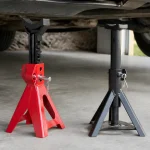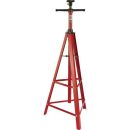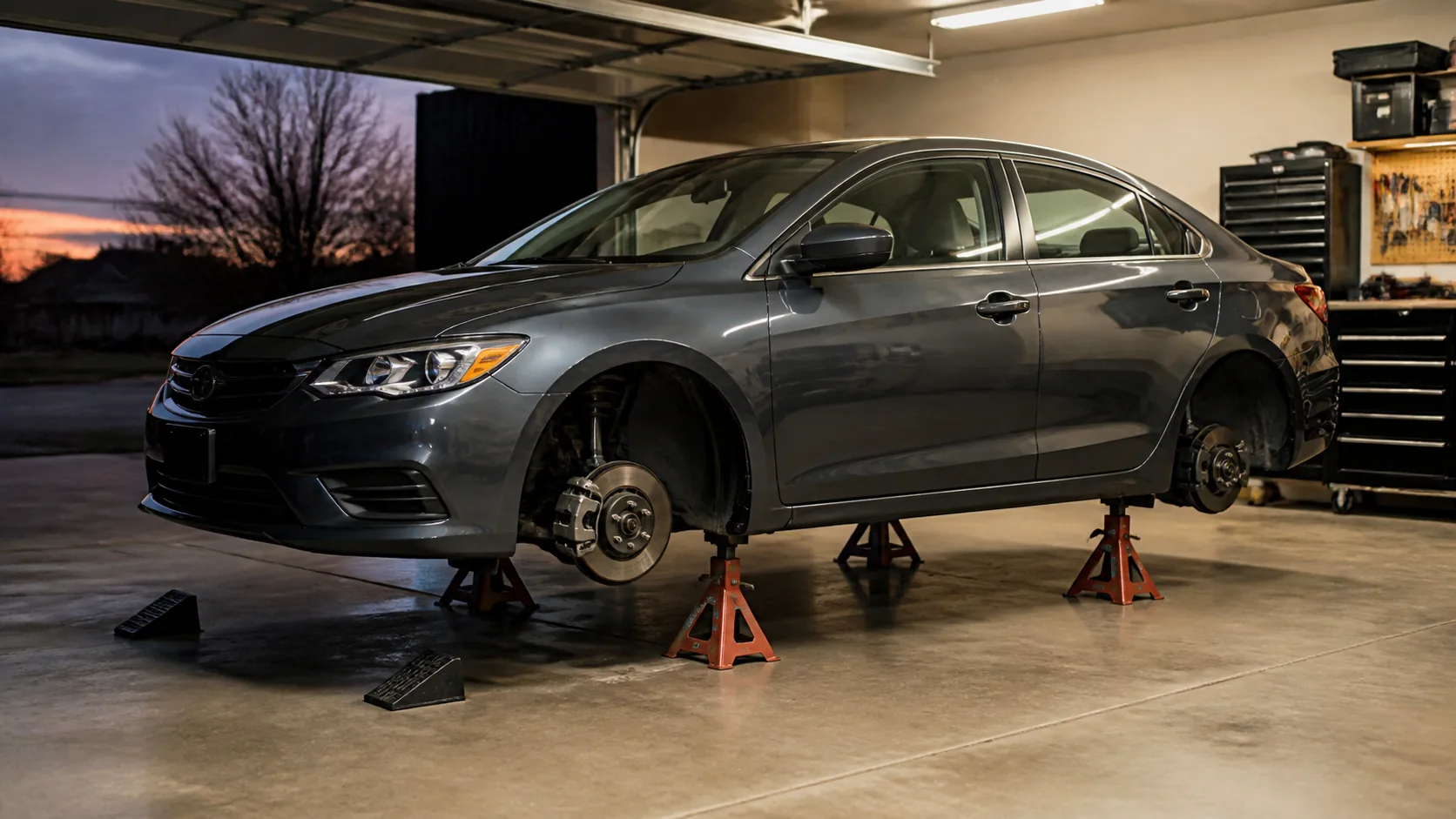
Time alone does not make properly placed stands fail, but an unattended garage adds risks: people, children, earthquakes, vibration, floor changes, and accidental contact.
For overnight vehicle support, begin with this fit question: All stands are matched, locked, and fully loaded. Then verify the vehicle procedure and the equipment manual against the actual car, load, and work surface.
Plan the complete job before lifting. In this case, “Complete normal lift and stability checks” comes first; “Reinspect every contact before resuming work” is the final control. Thinking through both ends of the sequence prevents a workable lift from turning into an awkward or unsafe lowering problem.
Quick answer: A vehicle can remain on correctly rated stands when the manufacturer permits the support points and the secure indoor setup is stable, isolated, and rechecked. Avoid long-term or outdoor support when conditions cannot be controlled.
Start with the vehicle and equipment instructions
Plan overnight support before lifting. The area should be locked, level, dry, well lit, and free of traffic; the vehicle must be settled on stands rather than hydraulics.
The details that matter most for overnight vehicle support can vary by model year, drivetrain, trim, and modification. Use the exact vehicle and equipment instructions, then confirm that all stands are matched, locked, and fully loaded. A photo or forum answer for a similar vehicle is supporting context, not final authority.
What to inspect or compare
Compare the setup as a system rather than judging one specification in isolation. For overnight vehicle support, “Floor is structural concrete without cracks or contamination” and “Wheels or components removed do not alter balance unexpectedly” must both be true; extra capacity cannot correct poor geometry or an unsuitable contact point.
- All stands are matched, locked, and fully loaded.
- Floor is structural concrete without cracks or contamination.
- Wheels or components removed do not alter balance unexpectedly.
- Access is restricted and the vehicle cannot be bumped.
A practical step-by-step approach
Walk through the work while the tires are still on the floor. Start with “Complete normal lift and stability checks,” confirm where the jack and stands will sit, and leave enough access to complete “Reinspect every contact before resuming work” without moving loaded equipment.
- Complete normal lift and stability checks.
- Lower fully onto stands and remove unneeded jack pressure.
- Secure tools, parts, pets, and people away.
- Post a visible warning and lock the workspace.
- Reinspect every contact before resuming work.
Limits and warning signs
Do not leave a vehicle on stands over asphalt, soil, questionable slabs, or where weather and unauthorized access can change the setup.
The safe limit for overnight vehicle support is reached before guesswork or improvisation begins. Keep the vehicle as low as the repair allows, use firm level concrete and correctly rated stands, and keep every part of your body outside the crush zone until the support points are loaded and checked.
Common mistakes to avoid
- Starting work on overnight vehicle support without confirming this requirement: All stands are matched, locked, and fully loaded.
- Focusing on capacity while overlooking this fit issue: Floor is structural concrete without cracks or contamination.
- Continuing the procedure after the warning signs described above appear.
- Leaving the vehicle on the floor jack instead of completing the planned stand placement and stability check.
Safety reminder for leave car on jack stands overnight: the jack raises the vehicle; it does not replace a support stand. Except for the limited roadside wheel-change procedure described by the vehicle maker, transfer the load to correctly rated stands before any part of your body enters the under-vehicle danger zone.
Frequently asked questions
What is the first check for overnight vehicle support?
All stands are matched, locked, and fully loaded. Confirm that point against the exact vehicle and equipment manuals before placing a load on the jack.
Can a higher-capacity jack solve every problem with overnight vehicle support?
No. Floor is structural concrete without cracks or contamination. Capacity does not correct the wrong lift point, inadequate reach, poor saddle contact, or an unstable surface.
When should I stop and get help with overnight vehicle support?
Do not leave a vehicle on stands over asphalt, soil, questionable slabs, or where weather and unauthorized access can change the setup. If the correct information or equipment is unavailable, use a qualified repair facility instead of improvising.
Related guides
- Where to Place Jack Stands Under a Car
- Jack Stand Weight Ratings Explained
- Ratchet vs Pin-Style Jack Stands
- our jack stand guide
Final thoughts
A reliable result comes from matching overnight vehicle support to verified specifications and a complete support plan. If a detail cannot be confirmed, pause before placing the vehicle or equipment under load.
Source note for leave car on jack stands overnight: this guide was checked against UK HSE vehicle-lifting safety guidance. Use that safety context together with the instructions, limits, and lift points published by your vehicle and equipment manufacturers.