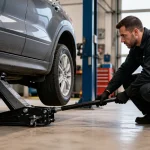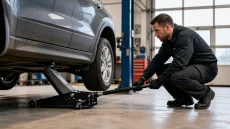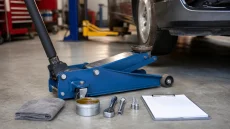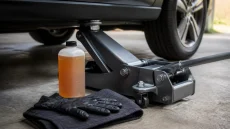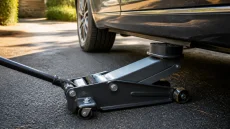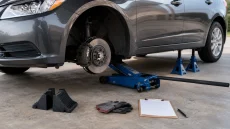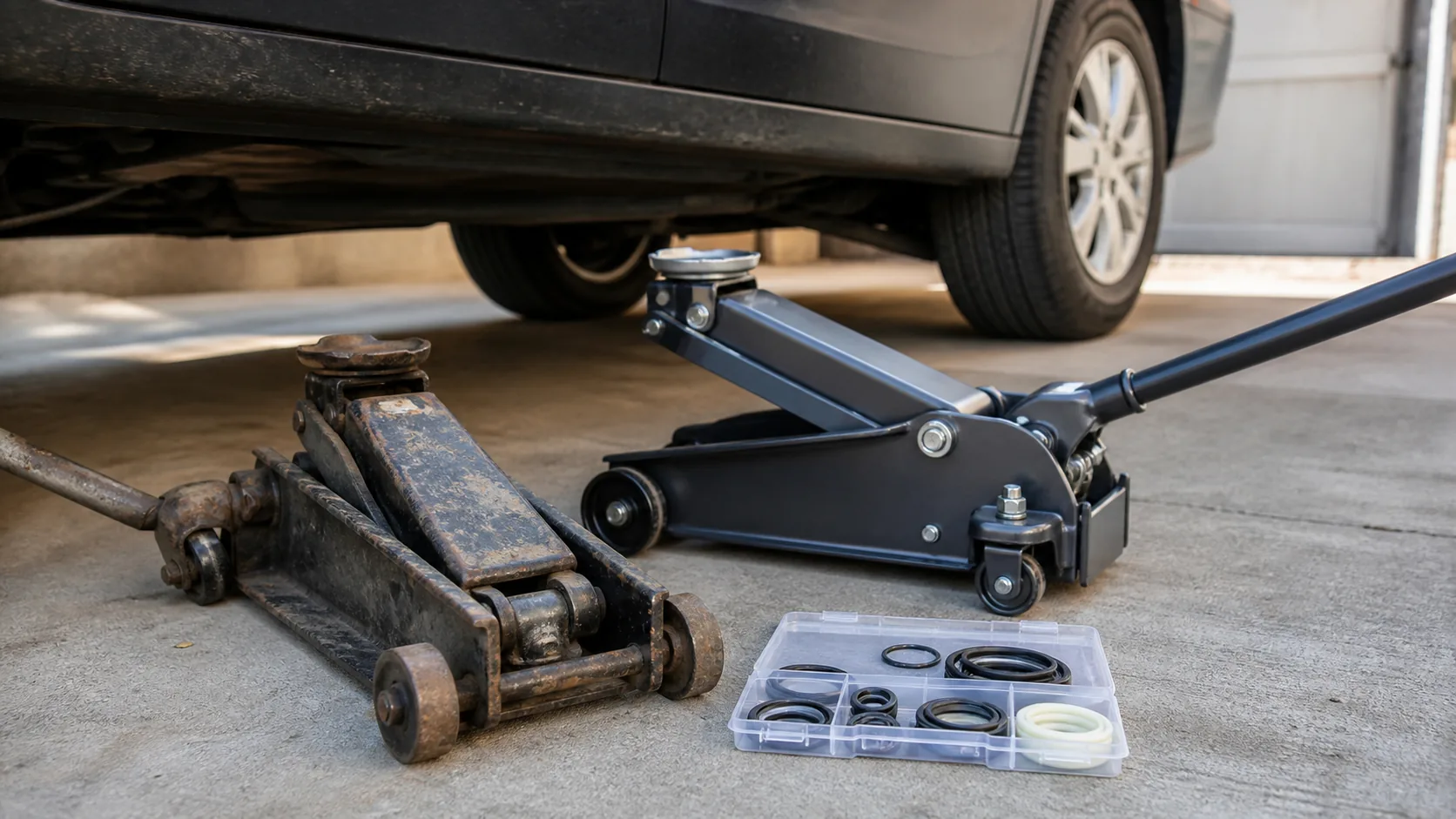
A seal kit can restore a known, well-supported jack, but it cannot correct a cracked casting, bent chassis, missing identity, or an unknown overload history.
For the rebuild-or-replace decision, begin with this fit question: No cracks, bends, severe corrosion, or damaged welds. Then verify the vehicle procedure and the equipment manual against the actual car, load, and work surface.
Plan the complete job before lifting. In this case, “Tag out the jack and record the failure” comes first; “Dispose of oil and retired equipment responsibly” is the final control. Thinking through both ends of the sequence prevents a workable lift from turning into an awkward or unsafe lowering problem.
Quick answer: Rebuild when the structure is sound, the fault is understood, correct parts and procedures exist, and proper testing is available. Replace when structural damage, uncertain rating, obsolete parts, or repair cost and risk outweigh the tool’s value.
Start with the vehicle and equipment instructions
Identify the exact model and serial information, document symptoms, clean the jack, and inspect the frame, ram, pump, wheels, saddle, and valve components.
The details that matter most for the rebuild-or-replace decision can vary by model year, drivetrain, trim, and modification. Use the exact vehicle and equipment instructions, then confirm that no cracks, bends, severe corrosion, or damaged welds. A photo or forum answer for a similar vehicle is supporting context, not final authority.
What to inspect or compare
Compare the setup as a system rather than judging one specification in isolation. For the rebuild-or-replace decision, “Manufacturer-approved parts and service data exist” and “Repair skill and safe load-test capability are available” must both be true; extra capacity cannot correct poor geometry or an unsuitable contact point.
- No cracks, bends, severe corrosion, or damaged welds.
- Manufacturer-approved parts and service data exist.
- Repair skill and safe load-test capability are available.
- Total parts, labor, and downtime make economic sense.
A practical step-by-step approach
Walk through the work while the tires are still on the floor. Start with “Tag out the jack and record the failure,” confirm where the jack and stands will sit, and leave enough access to complete “Dispose of oil and retired equipment responsibly” without moving loaded equipment.
- Tag out the jack and record the failure.
- Obtain an exploded diagram and parts list.
- Estimate full repair and test cost.
- Choose qualified rebuilding or a verified replacement.
- Dispose of oil and retired equipment responsibly.
Limits and warning signs
Replace rather than rebuild equipment with structural damage, an unreadable rating, altered safety valves, or incompatible improvised parts.
The safe limit for the rebuild-or-replace decision is reached before guesswork or improvisation begins. Keep the vehicle as low as the repair allows, use firm level concrete and correctly rated stands, and keep every part of your body outside the crush zone until the support points are loaded and checked.
Common mistakes to avoid
- Starting work on the rebuild-or-replace decision without confirming this requirement: No cracks, bends, severe corrosion, or damaged welds.
- Focusing on capacity while overlooking this fit issue: Manufacturer-approved parts and service data exist.
- Continuing the procedure after the warning signs described above appear.
- Leaving the vehicle on the floor jack instead of completing the planned stand placement and stability check.
Safety reminder for rebuild vs replace floor jack: the jack raises the vehicle; it does not replace a support stand. Except for the limited roadside wheel-change procedure described by the vehicle maker, transfer the load to correctly rated stands before any part of your body enters the under-vehicle danger zone.
Frequently asked questions
What is the first check for the rebuild-or-replace decision?
No cracks, bends, severe corrosion, or damaged welds. Confirm that point against the exact vehicle and equipment manuals before placing a load on the jack.
Can a higher-capacity jack solve every problem with the rebuild-or-replace decision?
No. Manufacturer-approved parts and service data exist. Capacity does not correct the wrong lift point, inadequate reach, poor saddle contact, or an unstable surface.
When should I stop and get help with the rebuild-or-replace decision?
Replace rather than rebuild equipment with structural damage, an unreadable rating, altered safety valves, or incompatible improvised parts. If the correct information or equipment is unavailable, use a qualified repair facility instead of improvising.
Related guides
- Repairing Or Replacement Floor Jack
- Why Is My Floor Jack Leaking Oil?
- How to Test a Floor Jack After Maintenance
- How to Store a Floor Jack Long Term
Final thoughts
A reliable result comes from matching the rebuild-or-replace decision to verified specifications and a complete support plan. If a detail cannot be confirmed, pause before placing the vehicle or equipment under load.
Source note for rebuild vs replace floor jack: this guide was checked against ASME PASE safety standard overview. Use that safety context together with the instructions, limits, and lift points published by your vehicle and equipment manufacturers.