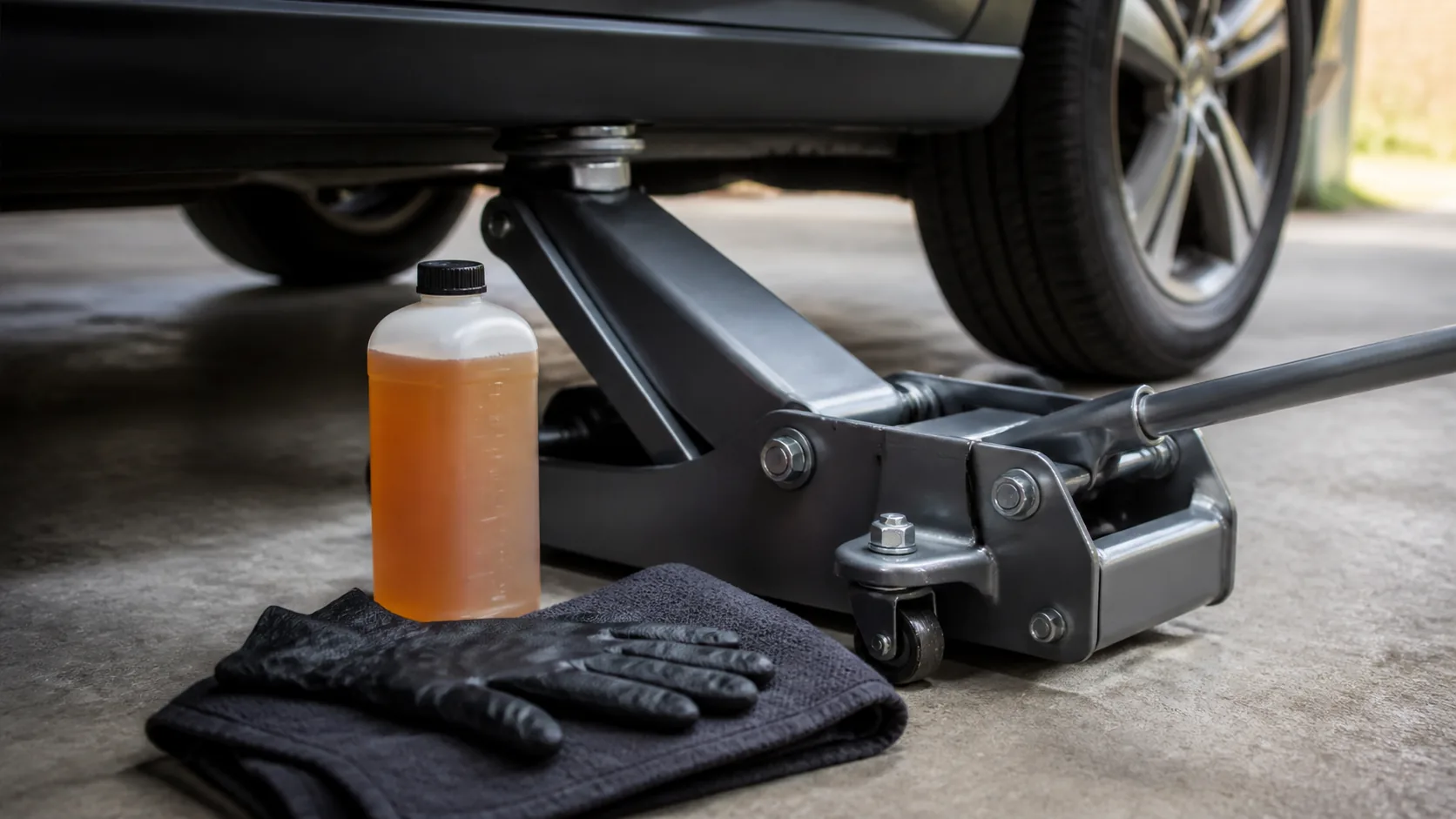
“Hydraulic oil” is not a single universal fluid. Viscosity, additives, seal compatibility, temperature range, and the jack maker’s specification all matter.
For floor-jack hydraulic oil, begin with this fit question: Fluid name, grade, and viscosity match the manual. Then verify the vehicle procedure and the equipment manual against the actual car, load, and work surface.
Plan the complete job before lifting. In this case, “Lower the jack fully and clean around the plug” comes first; “Bleed and test the jack using the manual procedure” is the final control. Thinking through both ends of the sequence prevents a workable lift from turning into an awkward or unsafe lowering problem.
Quick answer: Use the exact hydraulic jack oil or specification named in the jack manual. Do not substitute brake fluid, motor oil, power-steering fluid, transmission fluid, or an unknown mixed product.
Start with the vehicle and equipment instructions
Find the model label and manual before opening the reservoir. If the specification is unavailable, contact the manufacturer rather than selecting fluid by color.
The details that matter most for floor-jack hydraulic oil can vary by model year, drivetrain, trim, and modification. Use the exact vehicle and equipment instructions, then confirm that fluid name, grade, and viscosity match the manual. A photo or forum answer for a similar vehicle is supporting context, not final authority.
What to inspect or compare
Compare the setup as a system rather than judging one specification in isolation. For floor-jack hydraulic oil, “Container is clean, sealed, and within storage life” and “Existing oil shows no water, foam, debris, or burnt odor” must both be true; extra capacity cannot correct poor geometry or an unsuitable contact point.
- Fluid name, grade, and viscosity match the manual.
- Container is clean, sealed, and within storage life.
- Existing oil shows no water, foam, debris, or burnt odor.
- Fill position and level are understood.
A practical step-by-step approach
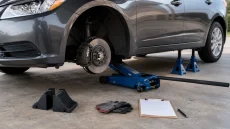
Walk through the work while the tires are still on the floor. Start with “Lower the jack fully and clean around the plug,” confirm where the jack and stands will sit, and leave enough access to complete “Bleed and test the jack using the manual procedure” without moving loaded equipment.
- Lower the jack fully and clean around the plug.
- Open only at the orientation specified.
- Add small amounts with clean dedicated equipment.
- Restore the plug and wipe all residue.
- Bleed and test the jack using the manual procedure.
Limits and warning signs
Overfilling can impair operation and create leaks. Contaminated or mixed fluid calls for proper service, not repeated topping up.
The safe limit for floor-jack hydraulic oil is reached before guesswork or improvisation begins. Keep the vehicle as low as the repair allows, use firm level concrete and correctly rated stands, and keep every part of your body outside the crush zone until the support points are loaded and checked.
Common mistakes to avoid
- Starting work on floor-jack hydraulic oil without confirming this requirement: Fluid name, grade, and viscosity match the manual.
- Focusing on capacity while overlooking this fit issue: Container is clean, sealed, and within storage life.
- Continuing the procedure after the warning signs described above appear.
- Leaving the vehicle on the floor jack instead of completing the planned stand placement and stability check.
Safety reminder for hydraulic oil for floor jack: the jack raises the vehicle; it does not replace a support stand. Except for the limited roadside wheel-change procedure described by the vehicle maker, transfer the load to correctly rated stands before any part of your body enters the under-vehicle danger zone.
Frequently asked questions
What is the first check for floor-jack hydraulic oil?
Fluid name, grade, and viscosity match the manual. Confirm that point against the exact vehicle and equipment manuals before placing a load on the jack.
Can a higher-capacity jack solve every problem with floor-jack hydraulic oil?
No. Container is clean, sealed, and within storage life. Capacity does not correct the wrong lift point, inadequate reach, poor saddle contact, or an unstable surface.
When should I stop and get help with floor-jack hydraulic oil?
Overfilling can impair operation and create leaks. Contaminated or mixed fluid calls for proper service, not repeated topping up. If the correct information or equipment is unavailable, use a qualified repair facility instead of improvising.
Related guides
- How To Refill Hydraulic Oil In Floor Jack
- How To Bleed A Floor Jack
- Floor Jack Won’t Go Down: Safe Troubleshooting Steps
- Floor Jack Lifts Slowly or Feels Spongy: What to Check
Final thoughts
A reliable result comes from matching floor-jack hydraulic oil to verified specifications and a complete support plan. If a detail cannot be confirmed, pause before placing the vehicle or equipment under load.
Source note for hydraulic oil for floor jack: this guide was checked against ASME PASE safety standard overview. Use that safety context together with the instructions, limits, and lift points published by your vehicle and equipment manufacturers.