Category: Cooling & HVAC

A bad blower motor may be silent, intermittent, noisy, slow, or able to start only after vibration. The same no-airflow complaint can come from a fuse, relay, ...

READ MORE +

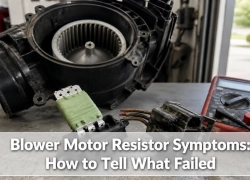
A failed blower motor resistor often removes one or more fixed fan speeds while leaving another speed working. However, a bad motor, overheated connector, ...

READ MORE +

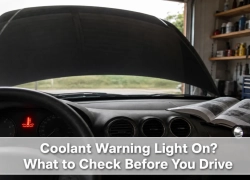
A coolant warning light can mean low fluid, excessive temperature, or a monitored cooling-system fault, depending on the vehicle. Treat a red light, rising ...

READ MORE +

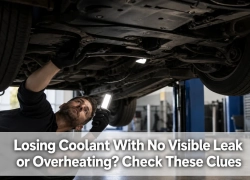
Coolant can disappear without leaving a driveway puddle when it leaks only under heat and pressure, lands on a hot surface and evaporates, collects inside the ...

READ MORE +

A short hiss from the dashboard just after the air conditioner starts or stops can be refrigerant pressures equalizing. A continuous hiss, cooling that fades, ...

READ MORE +

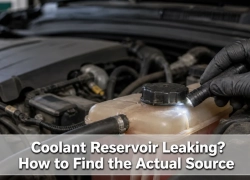
A coolant reservoir that looks wet is not automatically cracked. Coolant can escape from the cap, a hose connection, an overflow path, or a nearby component ...

READ MORE +

Low coolant can show up as a reservoir below its cold mark, weak or inconsistent cabin heat, a temperature warning, a sweet odor, visible residue, or an engine ...

READ MORE +

A bad coolant-temperature sensor can cause hard starting, an unusually high idle, poor fuel economy, incorrect gauge behavior, cooling-fan problems, or a ...

READ MORE +

A refrigerant leak becomes likely when AC cooling fades over weeks or months, oily residue appears around a hose or fitting, or the system cools again only ...

READ MORE +

When a car’s AC blows air but it is not cold, start by separating an airflow problem from a cooling problem. Weak air points toward the cabin filter, blower, ...

READ MORE +