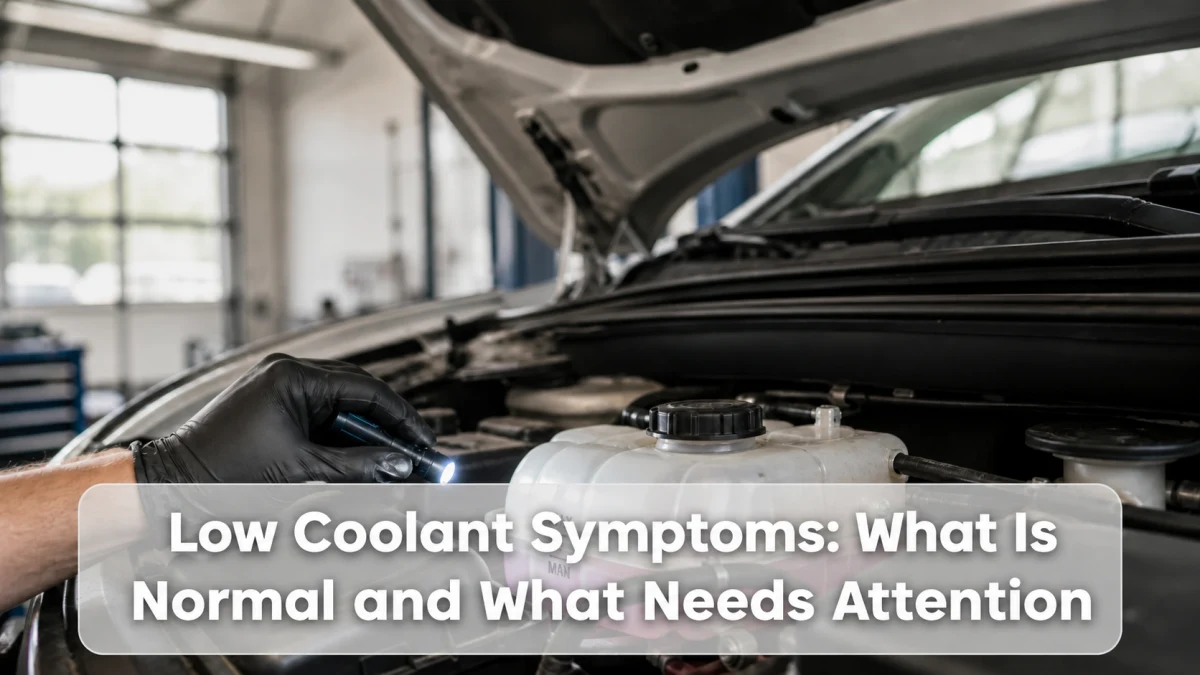
Low coolant can show up as a reservoir below its cold mark, weak or inconsistent cabin heat, a temperature warning, a sweet odor, visible residue, or an engine that runs hotter than usual. Coolant does not normally disappear in a sealed system. If the level keeps falling, find the leak instead of treating repeated top-ups as maintenance.
Symptoms of low coolant
The reservoir reading is the most direct clue when the vehicle’s manual specifies it as the normal inspection point. Other symptoms vary with system layout and how much fluid is missing.
| Observation | Possible meaning | Urgency |
|---|---|---|
| Level slightly below the cold mark once | Previous service level, small leak, or measurement-condition difference | Correct only as directed and monitor closely |
| Level falls again after correction | External or internal leak | Arrange diagnosis |
| Heater changes from warm to cold | Low level, air pocket, or lost circulation | Stop if temperature also rises |
| Sweet odor or colored residue | Coolant escaping and drying | Locate the source when cold |
| Red warning, steam, boiling, or gauge in hot zone | Cooling capacity may be lost | Stop safely and shut down |
| White exhaust after warm-up plus coolant loss | Possible internal leak | Professional diagnosis before continued use |
What is normal?
Reservoir level can move between cold and hot marks as coolant expands and contracts. Check it on level ground under the temperature condition specified by the owner’s manual. Comparing a hot reading one day with a stone-cold reading the next can create a false trend.
A tiny one-time correction after cooling-system service may reflect remaining air leaving the system, but continued loss is not normal. Record the date, cold level, mileage, and amount added.
Mark the cold level on a dated photo instead of relying on memory. Check again only under comparable conditions; that simple record helps separate a genuine downward trend from normal expansion and a slightly different parking angle.
Do not open a hot cooling system
A hot system can remain pressurized even after the gauge begins to fall. Opening a radiator or expansion-tank cap can release scalding liquid and steam. Park safely, shut the engine down, keep clear of fans, and wait until it is fully cold. Follow the manual rather than using a fixed waiting time.
Where coolant commonly goes
External leaks
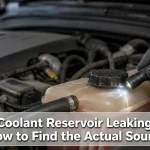
Inspect the cold engine for residue at the reservoir, cap, hose connections, radiator seams, thermostat housing, water-pump area, and heater-hose fittings. Fluid can travel along covers and splash backward, so the puddle is not always directly below the failed part.
Cabin leaks
A heater-core leak may produce damp carpet, a recurring film on the inside of the windshield, coolant odor, or discharge from the HVAC case.
Internal leaks
Coolant can enter a combustion chamber, oil passage, transmission cooler, or exhaust-related cooler on some vehicles. Persistent white exhaust after warm-up, a misfire on startup, unexplained pressure, or contaminated fluids can justify pressure, combustion-gas, leak-down, oil, or component-specific testing. None of those observations alone confirms a head-gasket failure.
How to top up safely
- Verify that the engine is fully cold and the vehicle is level.
- Identify the correct fill point in the manual. Do not confuse washer, brake, or power-steering reservoirs.
- Use the exact coolant specification and approved mixture. Color is not a reliable compatibility standard.
- Add only to the specified cold mark; overfilling can push fluid out as it expands.
- Secure the cap, clean spills, and record the amount added.
- Recheck after normal heat cycles. If the level drops, diagnose the loss.
Coolant is toxic. Store it securely, clean spills promptly, and keep it away from children and animals.
When not to drive
Do not continue when the engine is overheating, steam is present, coolant is pouring out, the warning returns soon after restart, cabin visibility is compromised, or coolant and oil appear contaminated. A tow protects the engine and avoids exposing other road users to spilled fluid.
If you need to inspect beneath the car, find the approved jacking points, use stands on a firm level surface, and follow the floor-jack safety checklist.
Frequently asked questions
Can low coolant make the heater blow cold?
Yes. Low level or trapped air can interrupt flow through the heater core. A stuck-open thermostat, restricted core, or blend-door fault can also reduce heat.
Can I use water temporarily?
Only follow the emergency guidance in the vehicle manual. Water changes freeze, boil, corrosion, and electrical properties and is not a universal substitute for the specified mixture.
Why is the reservoir full but the engine still overheats?
The system may have poor circulation, trapped air, a closed thermostat, fan or airflow failure, radiator restriction, cap problem, or a misleading reservoir reading. Stop driving and diagnose the system.
Sources
- Honda owner’s manual: maintenance items and fluid checks
- HELLA: cooling-system troubleshooting
- AutoZone: low-coolant driving considerations
Bottom line: measure the cold level consistently, use only the specified coolant, and investigate repeat loss. Temperature warnings, steam, or rapid loss turn a top-up question into a stop-driving decision.