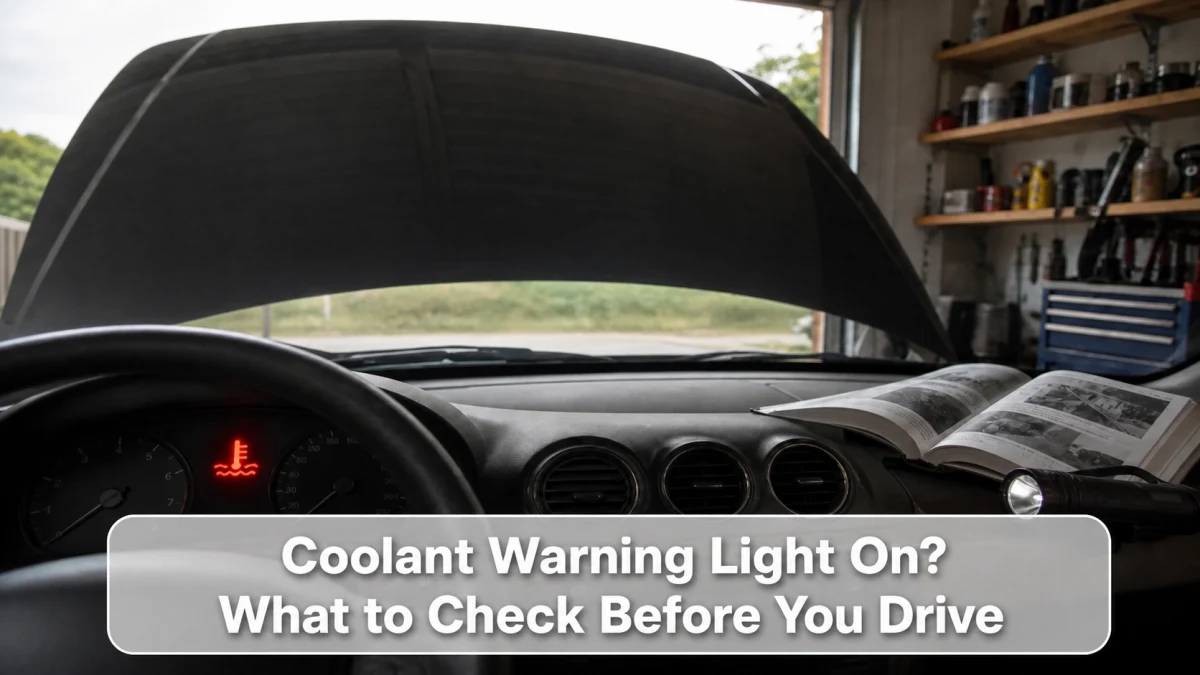
A coolant warning light can mean low fluid, excessive temperature, or a monitored cooling-system fault, depending on the vehicle. Treat a red light, rising gauge, steam, loss of power, or sudden heater change as a stop-now event. Identify the exact symbol in the owner’s manual before deciding to restart.
First identify which warning you have
A thermometer over waves commonly represents coolant temperature, but color and message wording matter. A separate reservoir-level symbol may look similar. Some vehicles display a blue temperature light while warming up; others use a gauge or text alert. Never assume a symbol has the same meaning across brands.
Photograph the instrument display before switching the ignition off if it is safe to do so. Record the gauge position, outside temperature, road speed, whether the AC was operating, and whether the cabin heater changed. Those details help a technician reproduce an intermittent problem.
Stop-now versus inspect-soon decision card
| What you observe | Recommended response | Why |
|---|---|---|
| Red temperature warning or gauge in hot zone | Stop safely and shut the engine down | Continuing can cause severe engine damage |
| Steam, boiling, or coolant pouring out | Stop, keep clear, and arrange a tow | The system may be hot and pressurized |
| Light plus sudden loss of cabin heat | Stop and shut down | Low coolant or lost circulation is possible |
| Low-level message with normal temperature | Park, cool fully, inspect as the manual directs | A leak may be present even without overheating |
| Brief warning that clears but repeats | Record conditions and arrange diagnosis | Intermittent level, sensor, wiring, or circulation faults need testing |
| Blue cold-engine light only | Follow the manual and drive gently if permitted | On some models this is an information indicator |
What to do after the engine is fully cold
- Park on level ground and wait until the cooling system is cold.
- Check the manual for the normal inspection point and cold-level marks.
- Look for a level below minimum, dried residue, fresh wetness, damaged hoses, or a loose-looking cap.
- Check beneath the car and around the reservoir, radiator seams, housing joints, and pump area without touching belts or fans.
- If the manual allows a correction, use only the specified coolant and do not overfill.
- Record the amount added. Repeat loss means the system needs diagnosis.
Our low-coolant guide explains how to measure a genuine trend. If the tank itself appears wet, use the reservoir leak inspection map before assuming it has cracked.
Why the light can come on when the reservoir looks full
A full-looking tank does not prove that coolant is circulating correctly. The system can have a stuck thermostat, trapped air, failing pump, blocked radiator, fan or airflow problem, damaged cap, incorrect coolant concentration, or an internal fault. On some layouts, the recovery bottle can retain fluid while another part of the system is low.
A level sensor or its connector can also fail. Sloshing on a slope, a contaminated float, wiring damage, or an instrument-cluster fault may trigger an intermittent message. Diagnose the circuit with the correct wiring diagram rather than bypassing the sensor.
Level warning versus temperature warning
A level warning reports what a sensor sees at a reservoir or chamber. A temperature warning reports a temperature value or calculated risk. Either one can be serious, and one may appear without the other. A low level can create local hot spots before the gauge reacts, while an airflow or thermostat fault can overheat a completely full system.
If the temperature rises quickly from cold or the upper cooling hose behavior is abnormal, a stuck-closed thermostat is one possibility—not a conclusion. Stop driving and use model-specific tests.
Can you restart?
Do not restart when steam, rapid leakage, contaminated fluids, severe noise, repeated red warning, or obvious overheating remains. A tow is cheaper than gambling on an engine. If the manual describes a low-level inspection, the engine is fully cold, the correct level has been restored, and no leak or temperature symptom is present, a short monitored trip to service may be allowed—but the vehicle-specific guidance controls.
During any permitted restart, watch the warning and gauge, listen for fan operation, and note cabin heat. Shut down immediately if the warning returns or temperature rises.
Frequently asked questions
Can cold weather turn on the coolant light?
Cold fluid contracts, so a marginal reservoir level can fall below a sensor threshold. That still warrants a cold-level check and leak monitoring rather than simply ignoring the warning.
Can a bad sensor cause a coolant warning?
Yes, but prove level, temperature, connector condition, wiring, and relevant trouble codes before replacing it. A sensor fault and a real cooling problem can exist together.
Can I add plain water?
Follow only the emergency instructions in the owner’s manual. Water changes freeze, boil, corrosion, and electrical properties and is not a universal substitute for the specified coolant mixture.
Sources
- Honda owner’s manual: maintenance and coolant-related guidance
- AutoZone: low-coolant warning considerations
Bottom line: identify the exact light, prioritize temperature and steam symptoms, and wait for a fully cold inspection. A normal-looking reservoir does not overrule a red temperature warning.