A calendar alone cannot tell you whether a floor jack is ready. A lightly used jack in a dry cabinet and a shop jack exposed to grit, moisture, and daily loads need different attention even when they are the same age.
Use three service triggers together: the maker’s calendar, the number and severity of lifts, and condition-based events. A leak, overload, impact, contaminated oil, slow response, or uncontrolled descent overrides the next date written in a log.
Plan the complete job before lifting. In this case, “Before each lift, make a brief visual and unloaded operational check” comes first; “Tag out and retire equipment that cannot be identified, repaired, or tested correctly” is the final control. Thinking through both ends of the sequence prevents a workable lift from turning into an awkward or unsafe lowering problem.
Quick answer: Inspect before every use and follow the manufacturer’s scheduled lubrication, fluid, bleeding, and load-test guidance. Service immediately after overload, impact, leakage, drift, contamination, or abnormal operation.
Use calendar, workload, and condition together
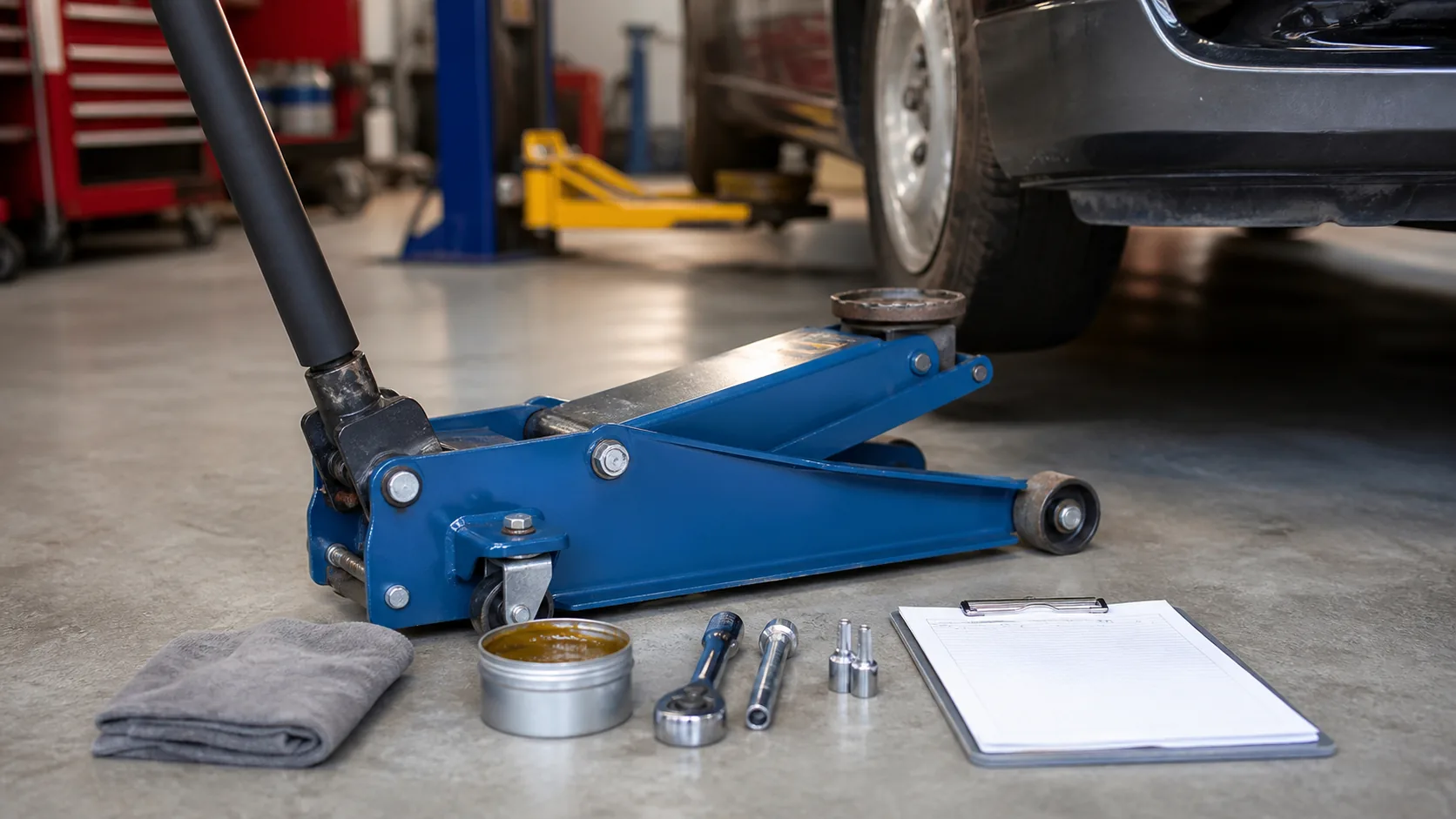
Create a service record with model and serial number, inspection dates, usage conditions, fluid specification, parts fitted, symptoms, repairs, and controlled test results. The record helps distinguish a recurring fault from routine upkeep.
The details that matter most for floor-jack service timing can vary by model year, drivetrain, trim, and modification. Use the exact vehicle and equipment instructions, then confirm that structural condition: no crack, bend, severe corrosion, loose fastener, or damaged weld. A photo or forum answer for a similar vehicle is supporting context, not final authority.
Separate a pre-use check from scheduled service
Compare the setup as a system rather than judging one specification in isolation. For floor-jack service timing, “Operating parts: saddle, casters, handle, return springs, pump linkage, and release control move normally” and “Hydraulic behavior: unloaded rise is smooth and lowering remains controllable without seepage or drift” must both be true; extra capacity cannot correct poor geometry or an unsuitable contact point.
- Structural condition: no crack, bend, severe corrosion, loose fastener, or damaged weld.
- Operating parts: saddle, casters, handle, return springs, pump linkage, and release control move normally.
- Hydraulic behavior: unloaded rise is smooth and lowering remains controllable without seepage or drift.
- The model manual’s inspection, lubrication, fluid, and qualified-test requirements are current.
Build a repeatable maintenance record
Walk through the work while the tires are still on the floor. Start with “Before each lift, make a brief visual and unloaded operational check,” confirm where the jack and stands will sit, and leave enough access to complete “Tag out and retire equipment that cannot be identified, repaired, or tested correctly” without moving loaded equipment.
- Before each lift, make a brief visual and unloaded operational check.
- After wet, dusty, or dirty work, clean and dry the jack before storage.
- Complete time- or use-based maintenance on the manufacturer’s schedule.
- Log the work, exact fluid or parts used, and the post-service test result.
- Tag out and retire equipment that cannot be identified, repaired, or tested correctly.
Events that cancel the normal interval
The next calendar date does not excuse a present fault. Leakage, drift, overload, impact, a bent component, abnormal resistance, or an unreadable rating takes the jack out of service immediately.
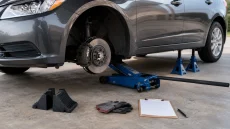
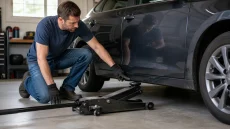
The safe limit for floor-jack service timing is reached before guesswork or improvisation begins. Keep the vehicle as low as the repair allows, use firm level concrete and correctly rated stands, and keep every part of your body outside the crush zone until the support points are loaded and checked.
Common mistakes to avoid
- Using an annual reminder as a substitute for a pre-use inspection.
- Changing oil by habit when the manual calls for a different check or interval.
- Returning a repaired jack to work without recording and testing it.
- Continuing to use a drifting or leaking jack until the scheduled service date.
Safety reminder for floor jack service interval: the jack raises the vehicle; it does not replace a support stand. Except for the limited roadside wheel-change procedure described by the vehicle maker, transfer the load to correctly rated stands before any part of your body enters the under-vehicle danger zone.
Frequently asked questions
Does every floor jack need annual service?
Not under one universal rule. Follow the manufacturer and any applicable workplace inspection requirements; workload and condition may require attention sooner.
Should hydraulic oil be replaced on a fixed calendar?
Use the model’s specified interval and fluid. Contamination, water, or repair work can justify earlier service, while arbitrary changes risk introducing dirt or the wrong oil.
What belongs in a floor-jack maintenance log?
Record identity, date, inspection findings, symptoms, exact fluid and parts, who performed the work, and the result of the approved operational or load test.
Related guides
- How To Properly Maintain Your Floor Jack
- 10 Tips Properly Maintaining Floor Jack
- What Hydraulic Oil Should You Use in a Floor Jack?
- Floor Jack Won’t Go Down: Safe Troubleshooting Steps
Final thoughts
Treat service timing as a decision system rather than a single anniversary. The manual sets the baseline; workload, inspection findings, and unusual events decide whether the jack needs attention sooner.
Source note for floor jack service interval: this guide was checked against ASME PASE safety standard overview. Use that safety context together with the instructions, limits, and lift points published by your vehicle and equipment manufacturers.