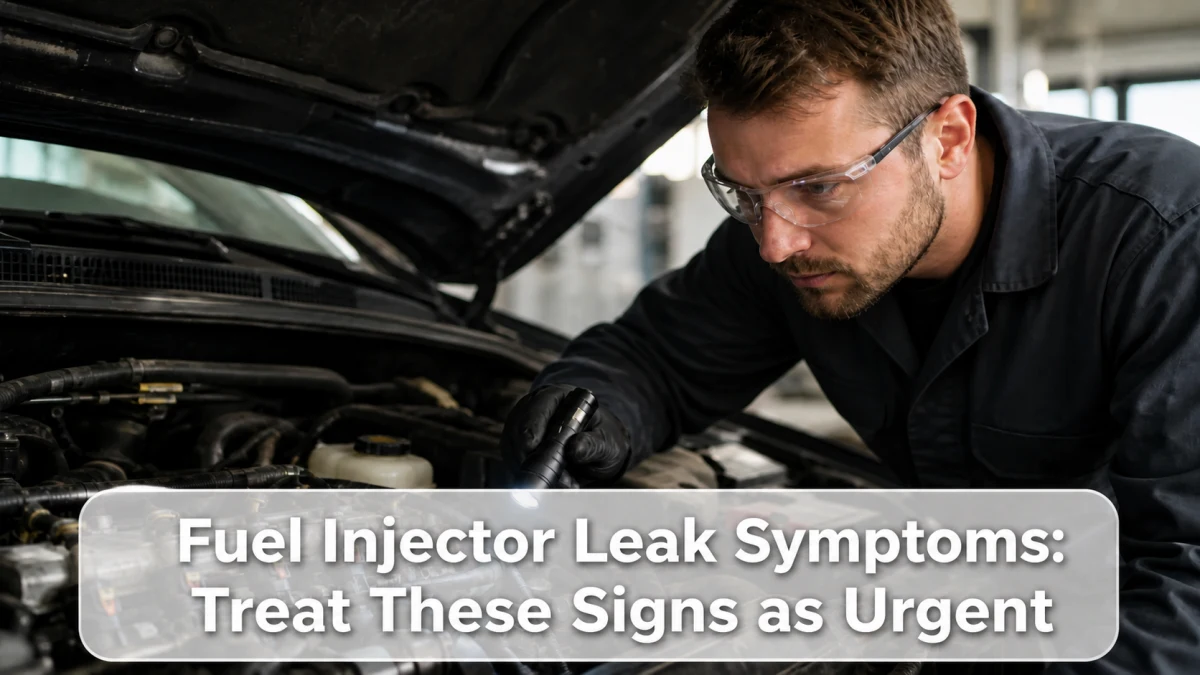
A visible fuel injector leak, wet fuel rail, strong persistent gasoline odor, smoke, or fuel dripping onto a hot engine is a shutdown-and-tow condition. An injector can also leak internally into a cylinder, causing hard hot starts, rich running, misfire, fuel in the oil, or rapid pressure loss. Do not open a pressurized fuel system at home to investigate.
Why injector leaks are urgent
Fuel vapor can ignite from a spark, hot exhaust, alternator, relay, static discharge, or other source. Direct-injection systems can retain extremely high pressure after shutdown and can inject fuel through skin. The correct depressurization, protective equipment, ventilation, and fire controls are essential.
If fuel is visible, do not restart the engine to locate the drip. Arrange professional transport and tell the operator that a fuel leak is suspected.
External-versus-internal leak matrix
| Evidence | External leak direction | Internal leak direction |
|---|---|---|
| Wetness at rail or injector | Seal, body, line, rail, or fitting | Not established |
| Strong under-hood odor | External leak or evaporative source | Rich exhaust can sometimes be smelled nearby |
| Hard hot restart | Possible vapor/pressure issue | Injector may drip into a cylinder |
| One rich or misfiring cylinder | Electrical and mechanical faults still possible | Leaking or poorly atomizing injector |
| Fuel-contaminated engine oil | Not the usual external path | Injector, pump, or combustion fault may dilute oil |
| Rapid rail-pressure decay | External leak must be ruled out | Injector, pump check valve, regulator, or system path |
Safe visual checks
With the engine off and cool, look for staining, wetness, damaged wiring, or missing retainers from a safe distance. Do not put your face over the rail, use a shop light that can spark, or wipe an active leak. A mirror or camera zoom can document the area without reaching into it.
Fuel odor can also come from a cap, evaporative line, purge system, tank, pump module, or spill. The absence of visible wetness does not make a persistent odor safe.
What to tell the repair shop
Provide the first odor location, cold-versus-hot timing, refueling history, warning-light behavior, fuel level, recent injector or rail work, and whether the oil level rose. Do not clear codes or wash the engine before transport. Those details help the technician choose a safe inspection bay and reproduce an intermittent leak without unnecessary engine running.
Internal leak clues
An injector that does not seal may drip after shutdown. The affected cylinder can start rich, misfire briefly, wash oil from the cylinder wall, and dilute the crankcase. Black smoke, a fuel smell at the exhaust, reduced fuel economy, or a rich code can occur, but ignition and sensor faults can create similar symptoms.
Check engine oil level and odor only with the engine off, using the manual procedure. A rising level or obvious fuel contamination warrants no further running because diluted oil protects bearings poorly.
How a shop confirms the source
- Scan codes, misfire counters, fuel trims, rail pressure, and freeze-frame data.
- Inspect the entire supply and return path for external leakage using approved equipment.
- Perform model-specific pressure leak-down while separating injector, pump, regulator, and check-valve paths.
- Use injector balance or contribution testing under controlled conditions.
- Inspect spark plugs, cylinders, and oil when internal leakage is suspected.
- For direct injection, follow manufacturer high-pressure pipe and seal replacement rules.
Pressure values, command times, injector resistance, seal lubrication, torque, and high-pressure line reuse rules are engine-specific. Generic numbers can cause a leak or misdiagnosis.
Leak versus ordinary misfire
A coil, spark plug, compression loss, vacuum leak, wiring fault, or clogged injector can misfire without leaking fuel. Conversely, a leaking injector can damage a catalytic converter if unburned fuel reaches it. A flashing malfunction indicator is a reason to reduce load and stop promptly.
If the warning began after routine service, use the post-service check engine light guide to preserve the code and timeline without assuming causation.
Tow or drive?
Tow for visible fuel, a strong persistent raw-fuel odor, smoke, fuel-contaminated oil, severe misfire, or fuel-system warning. Do not park a suspected leaking vehicle inside an attached garage. Keep a safe distance and use the emergency equipment guidance in things to keep in your car, without attempting to fight a growing engine fire.
Frequently asked questions
Can an injector O-ring leak only when cold?
Temperature and pressure can change a marginal seal’s behavior, so intermittent leaks are possible. Professional testing must reproduce the conditions safely.
Will injector cleaner stop a leak?
No additive repairs a damaged seal, cracked injector, rail, or high-pressure connection. Cleaner also cannot make a confirmed external leak safe to run.
Can a leaking injector damage the engine?
Yes. Fire aside, an internal leak can dilute oil, wash cylinder walls, foul plugs, overheat a catalyst, and contribute to mechanical damage.
Sources
- NHTSA-hosted manufacturer bulletin: fuel injector leak diagnosis example
- CarParts: fuel injector repair and safety overview
Bottom line: visible fuel and persistent raw-fuel odor are not test-drive symptoms. Shut down, remove ignition sources, tow the vehicle, and let proper pressure and cylinder tests distinguish an external leak from an injector dripping internally.