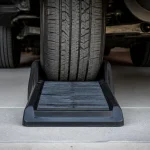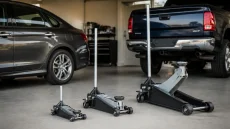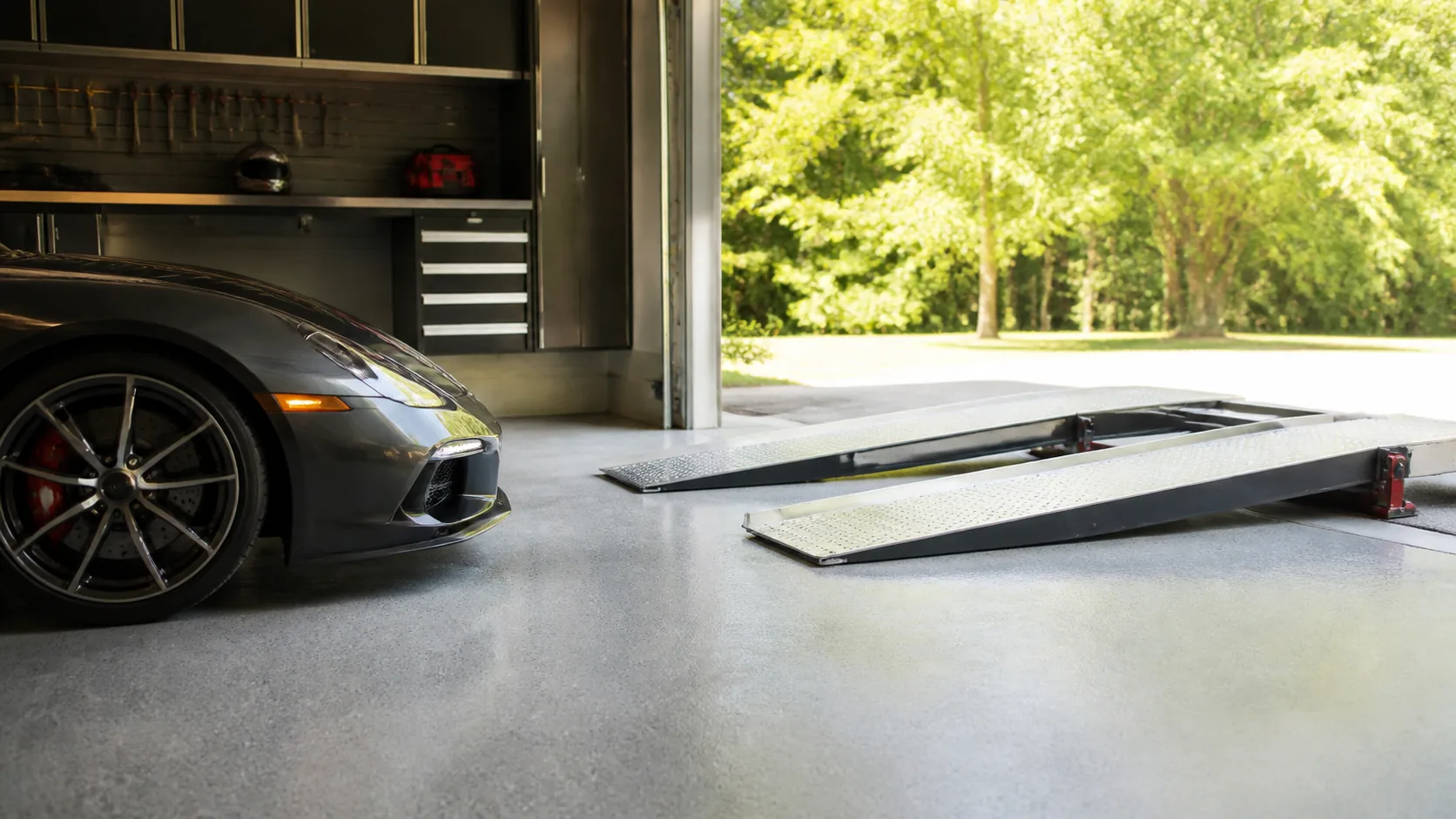
Low cars usually hit the bumper or splitter before the tire reaches a steep ramp. Platform height alone does not reveal whether the approach angle will fit.
For ramps for a low-clearance car, begin with this fit question: Approach angle and ramp length. Then verify the vehicle procedure and the equipment manual against the actual car, load, and work surface.
Plan the complete job before lifting. In this case, “Measure tire width, overhang, and lowest clearance” comes first; “Make the first climb at idle speed and stop if contact approaches” is the final control. Thinking through both ends of the sequence prevents a workable lift from turning into an awkward or unsafe lowering problem.
Quick answer: Choose long, shallow-angle ramps rated for the car, wide enough for the full tire, and high enough for the job. Measure front overhang, ground clearance, tire width, and required access.
Start with the vehicle and equipment instructions
Model the approach with the vehicle on level ground: the line from the tire contact patch to the lowest overhanging body point must clear the ramp surface.
The details that matter most for ramps for a low-clearance car can vary by model year, drivetrain, trim, and modification. Use the exact vehicle and equipment instructions, then confirm that approach angle and ramp length. A photo or forum answer for a similar vehicle is supporting context, not final authority.
What to inspect or compare
Compare the setup as a system rather than judging one specification in isolation. For ramps for a low-clearance car, “Platform width, stop height, and tire fit” and “Rated pair capacity and anti-slip design” must both be true; extra capacity cannot correct poor geometry or an unsuitable contact point.
- Approach angle and ramp length.
- Platform width, stop height, and tire fit.
- Rated pair capacity and anti-slip design.
- Raised height provides the needed service access.
A practical step-by-step approach
Walk through the work while the tires are still on the floor. Start with “Measure tire width, overhang, and lowest clearance,” confirm where the jack and stands will sit, and leave enough access to complete “Make the first climb at idle speed and stop if contact approaches” without moving loaded equipment.
- Measure tire width, overhang, and lowest clearance.
- Compare a dimensional drawing of the ramp.
- Check that bodywork clears at entry and exit.
- Align on clean concrete with a safe spotter.
- Make the first climb at idle speed and stop if contact approaches.
Limits and warning signs
Do not extend ramps with loose boards or continue when a bumper, splitter, or undertray begins to flex.
The safe limit for ramps for a low-clearance car is reached before guesswork or improvisation begins. Keep the vehicle as low as the repair allows, use firm level concrete and correctly rated stands, and keep every part of your body outside the crush zone until the support points are loaded and checked.
Common mistakes to avoid
- Starting work on ramps for a low-clearance car without confirming this requirement: Approach angle and ramp length.
- Focusing on capacity while overlooking this fit issue: Platform width, stop height, and tire fit.
- Continuing the procedure after the warning signs described above appear.
- Leaving the vehicle on the floor jack instead of completing the planned stand placement and stability check.
Safety reminder for car ramps for low cars: the jack raises the vehicle; it does not replace a support stand. Except for the limited roadside wheel-change procedure described by the vehicle maker, transfer the load to correctly rated stands before any part of your body enters the under-vehicle danger zone.
Frequently asked questions
What is the first check for ramps for a low-clearance car?
Approach angle and ramp length. Confirm that point against the exact vehicle and equipment manuals before placing a load on the jack.
Can a higher-capacity jack solve every problem with ramps for a low-clearance car?
No. Platform width, stop height, and tire fit. Capacity does not correct the wrong lift point, inadequate reach, poor saddle contact, or an unstable surface.
When should I stop and get help with ramps for a low-clearance car?
Do not extend ramps with loose boards or continue when a bumper, splitter, or undertray begins to flex. If the correct information or equipment is unavailable, use a qualified repair facility instead of improvising.
Related guides
- our car ramp guide
- Best Jack Setup for a Low-Clearance Sports Car
- How to Stop Car Ramps From Sliding
- Car Ramps vs Jack Stands: Which Is Better for the Job?
Final thoughts
A reliable result comes from matching ramps for a low-clearance car to verified specifications and a complete support plan. If a detail cannot be confirmed, pause before placing the vehicle or equipment under load.
Source note for car ramps for low cars: this guide was checked against UK HSE vehicle-lifting safety guidance. Use that safety context together with the instructions, limits, and lift points published by your vehicle and equipment manufacturers.