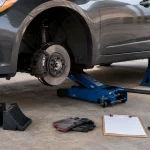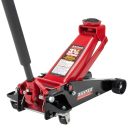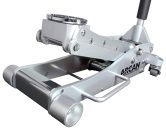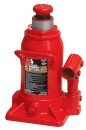
A jack’s ton rating is easy to notice, but it is only one part of the fit. The jack must also slide under the vehicle, reach the approved lift point, rise high enough for the repair, and remain stable on your floor.
Choosing only by the vehicle’s total weight can lead to a jack that is technically strong enough yet frustrating—or impossible—to use.
Quick answer: For many passenger cars and compact crossovers, a quality 2-ton jack can have sufficient lifting capacity; a 3-ton model gives more margin and commonly suits SUVs and light pickups. Large or modified vehicles may justify 4 tons. Verify actual vehicle weight, axle loads, lift-point height, and the jack manufacturer’s limits before buying.
Start with real vehicle weight
Find the gross vehicle weight rating and axle ratings on the door-jamb label, then compare them with curb weight in the owner information. GVWR is the maximum loaded vehicle weight, not necessarily what the vehicle weighs today, but it gives useful context for a conservative equipment choice.
A service jack often raises one end or one corner rather than the whole vehicle. Even so, weight distribution changes with cargo, drivetrain, slope, and lift angle. Do not divide the total weight by four and call that the required capacity.
When 2, 3, and 4 tons make sense
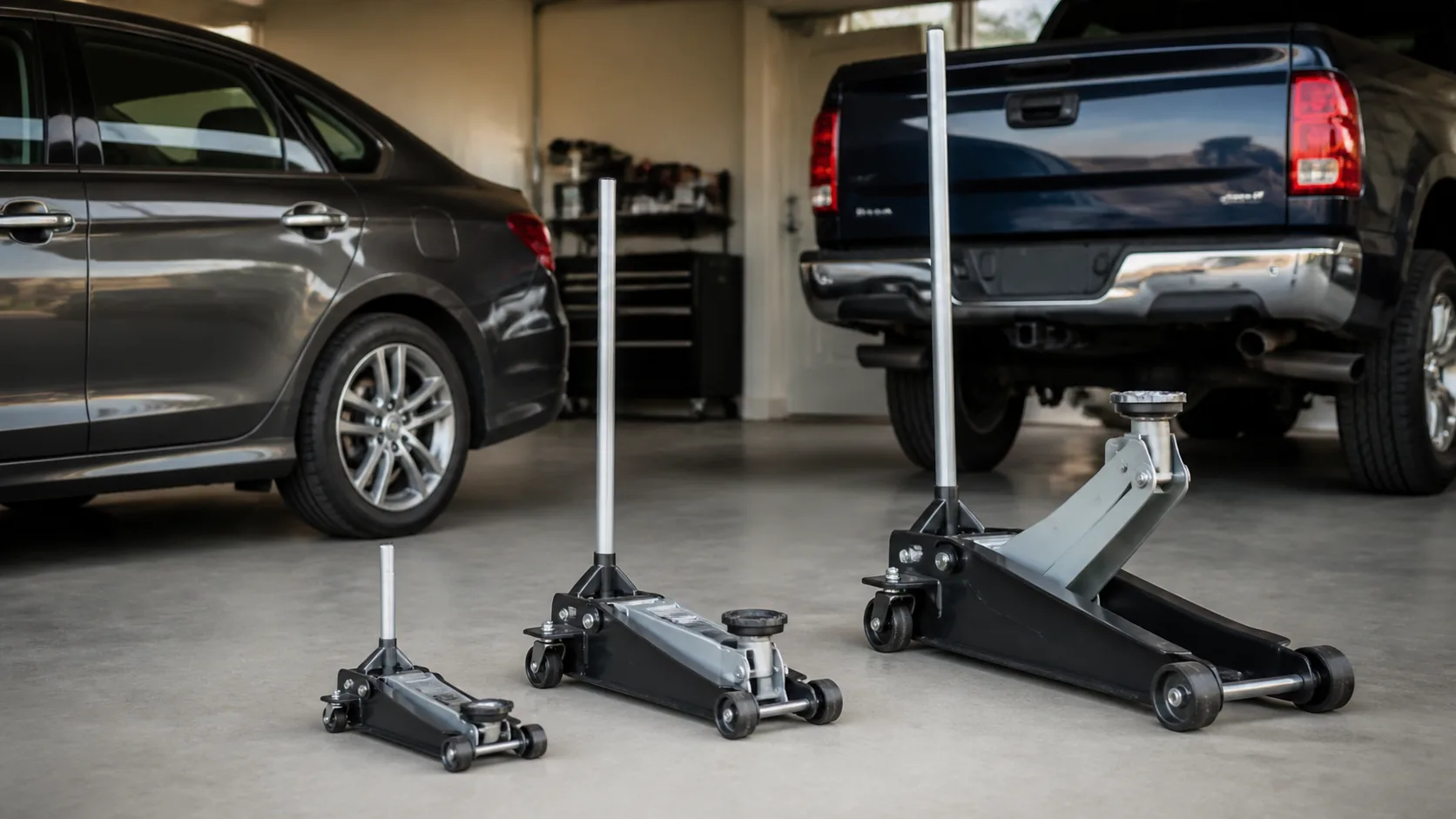
A 2-ton jack is compact and can be appropriate for ordinary sedans when its dimensions and manual support the task. A 3-ton jack is a versatile home-garage choice for heavier cars, crossovers, many SUVs, and light trucks. A 4-ton unit is larger and heavier but can provide the capacity, chassis length, and lift height demanded by substantial vehicles.
These are selection ranges, not permissions. Compare the actual rating to the manufacturer’s lifting instructions, and never exceed the marked capacity.
Measure clearance, reach, and lift height
Measure from the floor to the lift point with the tires inflated normally. For a low car, the jack’s minimum saddle height must leave practical clearance. For a truck, measure how high the saddle must travel before the suspension unloads and the tire clears the floor. Long-reach designs help access central points that sit far behind a bumper or side skirt.
Check handle swing and garage space too. A long chassis can be stable and useful, but it may be awkward in a cramped bay.
Pair the jack with the right supports
Jack stands need their own adequate rating, useful height range, stable base, and compatible saddle. Read whether a stand rating applies per stand or per matched pair. Wheel chocks must fit the tires and contact the floor securely.
Buying a larger jack while keeping undersized or damaged stands does not improve the safety of the overall system. Evaluate the lifting setup as a complete chain.
Common mistakes to avoid
- Buying by tonnage without measuring minimum and maximum height.
- Using curb weight while ignoring cargo, accessories, or modifications.
- Believing a safety valve makes it acceptable to work at the rating limit casually.
- Pairing a heavy-duty jack with light, mismatched, or poorly fitting stands.
Safety reminder for what size floor jack do I need: the jack raises the vehicle; it does not replace a support stand. Except for the limited roadside wheel-change procedure described by the vehicle maker, transfer the load to correctly rated stands before any part of your body enters the under-vehicle danger zone.
Frequently asked questions
Is a 3-ton floor jack overkill for a sedan?
It can be a practical choice if it fits under the car and is easy to position. Extra rating does not hurt, but excessive size or minimum height can.
Does a 2-ton jack lift exactly 4,000 pounds?
Its marked capacity is the maximum rated load under the manufacturer’s conditions. It should not be treated as a target working load or exceeded.
Should I buy the highest-capacity jack I can afford?
Not automatically. Choose enough capacity plus the clearance, reach, lift height, maneuverability, and service support your vehicles require.
Related guides
- how to choose the right floor jack
- 3 Ton Aluminum Floor Jack Reviews
- How to Find the Correct Jacking Points on Any Car
- our step-by-step floor jack guide
Final thoughts
The best size is the one that provides comfortable capacity margin and physically reaches your vehicle’s approved points. Measure first; the few numbers you collect will make the buying decision much clearer.
Source note for what size floor jack do I need: this guide was checked against ASME PASE safety standard overview. Use that safety context together with the instructions, limits, and lift points published by your vehicle and equipment manufacturers.