Change power steering fluid according to the maintenance schedule and fluid specification for your exact vehicle, then shorten the inspection interval when heat, towing, contamination, or hard steering use applies. First confirm that the car has a hydraulic system—electric power steering has no hydraulic steering fluid to replace.
Start by checking the steering system type
A hydraulic system usually has a pump, reservoir, pressure and return hoses, and a steering gear or rack. An electro-hydraulic system still uses fluid but drives the pump electrically. Fully electric power steering uses an electric assist motor and has no power steering reservoir.
Do not pour fluid into a container based only on its location. Brake, washer, coolant, and clutch reservoirs can sit nearby. The owner’s manual or under-hood label should identify the correct service point.
There is no universal change mileage
Some manufacturers publish a time or mileage interval, some place the service under severe-use conditions, and others call for inspection rather than routine replacement. Model year, steering design, fluid, and market can change the schedule. A shop’s generic interval can be a discussion starter, but it does not override manufacturer information.
| Use condition | Why it matters | Interval response |
|---|---|---|
| Normal mixed driving | Typical heat and steering load | Follow the normal schedule and inspect regularly |
| Frequent towing or heavy loads | More steering effort and heat at low speed | Use the severe-service guidance if listed |
| Repeated parking maneuvers | High pump load with limited airflow | Inspect condition and leaks more often |
| Hot climate or under-hood heat | Accelerates fluid oxidation | Follow severe-use or condition-based checks |
| Water or wrong-fluid contamination | Lubrication and seal compatibility may be compromised | Diagnose and correct promptly |
| Hose, pump, or rack replacement | System is already being opened | Use the repair procedure’s refill and bleed steps |
Fluid-condition clues
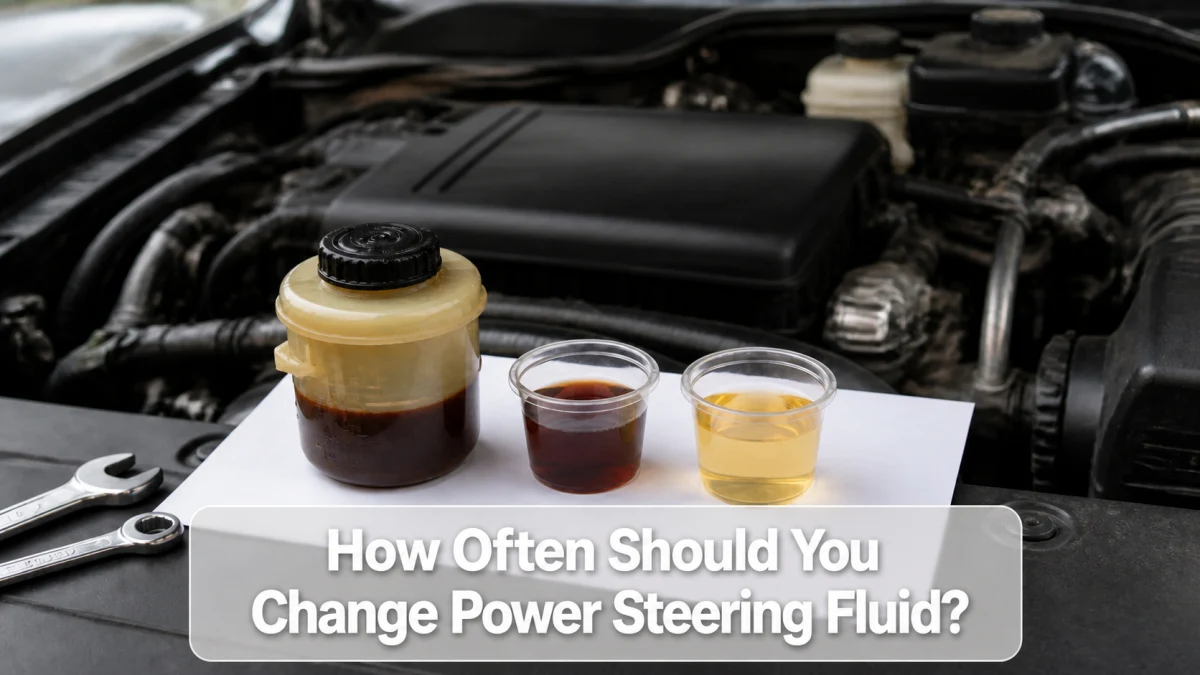
Compare reservoir fluid with new approved fluid on a white background. Darkening alone does not set a precise service interval, but burnt odor, suspended particles, foam, milkiness, or visible contamination deserves attention. A falling level indicates a leak because hydraulic steering fluid is not normally consumed.
Noise and heavy steering do not automatically mean “old fluid.” Low level, air, a slipping belt, damaged pump, restricted hose, electrical supply fault on an electro-hydraulic unit, steering gear wear, alignment, or tire condition can produce similar symptoms.
Build a usable service record
Record the fluid brand and specification, quantity removed and added, service method, cold and hot level observations, and any leak location. Save the receipt or product label. At the next inspection, that record makes it easier to distinguish normal color change from rapid deterioration and prevents an unknown fluid from being mixed into the system.
Drain-and-fill versus exchange
A reservoir drain-and-fill replaces only part of the fluid and may be repeated as the service information allows. A line exchange replaces more, but connecting the wrong hose, running the pump dry, or using excessive flow can damage the system. Some procedures require turning the wheels with the front raised, specific engine states, or a vacuum bleed.
“Flush” is used loosely. Ask what method, fluid, quantity, and bleed process will be used. Avoid universal chemical cleaners unless the vehicle manufacturer approves them.
Wrong-fluid risk
Vehicles may specify dedicated power steering fluid, a particular automatic transmission fluid, or another tightly defined product. Fluids that look alike may use different friction modifiers, viscosity, and seal compatibility. Use the specification, approval, and part information—not color or a “universal” label alone.
Basic service planning
- Confirm vehicle identification, steering type, capacity, and fluid specification.
- Read the maintenance and repair procedure, including temperature and bleed conditions.
- Inspect the reservoir, cap, hoses, clamps, pump, and rack boots for leakage.
- Prepare clean dedicated tools and prevent dirt from entering the system.
- Collect used fluid and clean spills from belts, rubber, paint, and pavement.
- Set the level under the specified engine and temperature condition.
- Bleed as directed, then recheck steering feel, noise, leaks, and level.
Our fluid-service tool guide covers clean drain equipment and measurement. If a lift is required, use approved points, rated stands, and the floor-jack safety checklist.
Frequently asked questions
Can I judge power steering fluid by color?
Color can flag a major change or contamination, but formulations begin in different colors and darken at different rates. Specification, history, condition, and system tests matter more.
Will changing old fluid damage the steering?
Correct fluid installed with the approved method does not create mechanical wear that was already present. An aggressive or incorrect procedure can introduce air, dirt, wrong chemistry, or level errors, so method matters.
How often should I check the level?
Use the owner’s manual and routine-service inspection schedule. Check promptly after steering noise, a change in assist, visible leakage, or repair.
Sources
- Honda owner’s manual example: power steering fluid inspection and specification
- CarParts: power steering fluid service considerations
Bottom line: identify the system, follow its schedule, and respond to severe use or contamination. There is no responsible single mileage that fits every hydraulic steering system.