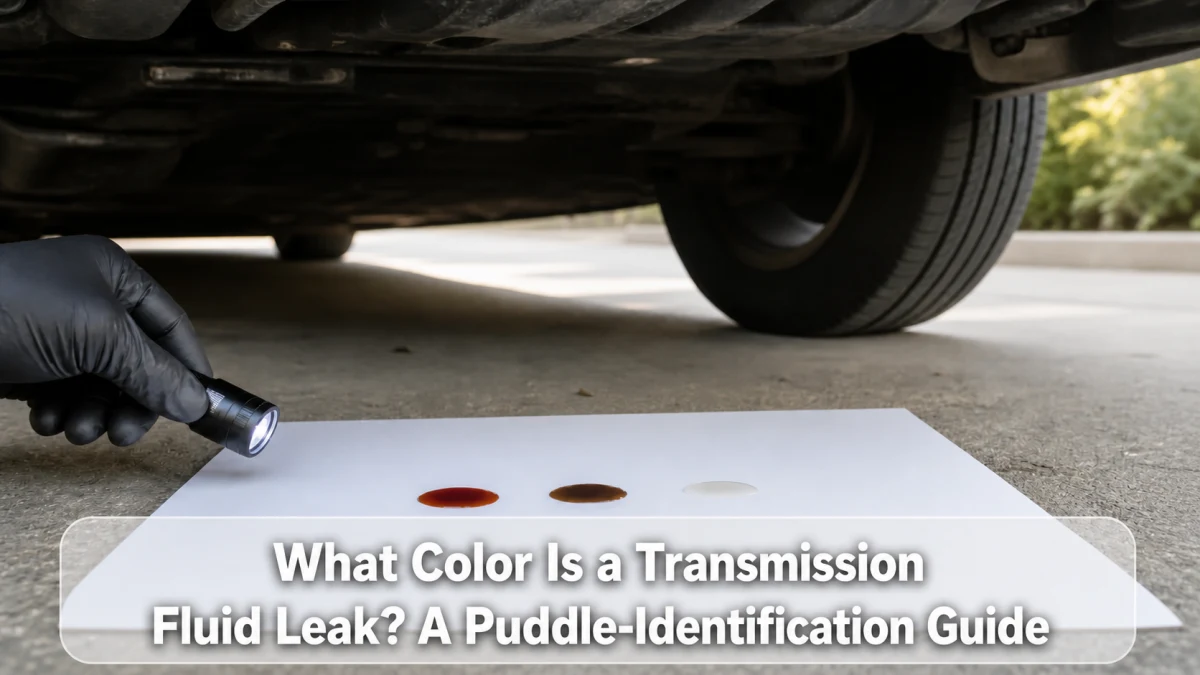
Fresh automatic transmission fluid may be red, amber, blue-green, or another manufacturer-specific color; used fluid often darkens. A puddle’s color alone cannot identify it. Combine color with feel, odor, location, fluid level, and a cleaned recheck before deciding that the transmission is leaking.
Transmission fluid color range
Many conventional ATFs start red because of dye, but fluid families and OEM products differ. CVT and dual-clutch fluids may begin amber, greenish, blue, or another shade. Heat, clutch material, oxidation, and mixing change appearance. Fluid on dirty pavement also picks up grime and looks darker than it does on white paper.
Use the exact vehicle’s fluid specification and compare a sample only with the correct new product. Never choose replacement fluid by color.
Fluid color, texture, and location comparison
| Possible fluid | Common appearance | Other clues |
|---|---|---|
| Automatic/CVT fluid | Red, amber, greenish, blue, brown, or dark with age | Oily; often near transmission, cooler lines, or axle seals |
| Engine oil | Honey to brown or black | Oily; can travel rearward from the engine |
| Coolant | Many bright or muted colors | Watery/slippery; dried crust and sweet odor may occur |
| Brake fluid | Clear to amber or dark | Thin and slippery; near wheel or hydraulic components is urgent |
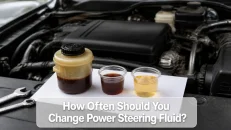
| Power steering fluid | Clear, amber, red, or dark | On hydraulic systems near pump, hoses, or rack |
| Gear oil | Amber to dark brown | Thick with a strong sulfur-like odor |
| Water | Clear | AC condensation is often normal; no oily residue |
| Washer fluid | Blue or other dyed watery fluid | Washer odor and leak near bottle or lines |
Use location carefully
A puddle under the transmission is a clue, not proof. Airflow and gravity carry engine oil, coolant, or steering fluid along covers and crossmembers. Transmission fluid can also travel from a cooler line, vent, side cover, sensor, axle seal, pump area, or higher case joint before dripping from the pan.
Mark the tire positions around a clean sheet of cardboard. After the vehicle sits, photograph the drop pattern and compare it with component locations. Then inspect upward for the first wet point. Heat soak and drain-back can change the pattern well after parking.
Confirm with level and service history
Read the manual before checking transmission fluid. Some units use a dipstick; others require the vehicle level, engine running or stopped, selector cycled, and fluid within a specific temperature window. Opening the wrong plug or checking at the wrong temperature can create an incorrect level.
Review recent service. A spill around a fill point may drip without an active leak, while a loose plug, reused seal, overfill, or improperly seated dipstick can create fresh wetness. Clean and recheck rather than assuming.
Build a simple leak-rate record
Replace the cardboard at the same time each day and photograph it beside a ruler or coin without touching the fluid. Record parking duration, approximate drop count or stain size, mileage, weather, and whether the vehicle was driven. The stain diameter is not an exact volume because cardboard absorption varies, but a consistent setup shows whether loss is accelerating. Pair that record with a valid fluid-level check and changes in engagement or shifting. It gives a repair shop far more useful evidence than “there was a red spot last week.”
Trace the actual source
- With the vehicle cool, inspect above the wettest area using a bright light.
- Clean old residue with a compatible product and dry the surface.
- Check the case, pan seam, plugs, cooler hoses, electrical pass-throughs, vent, and axle outputs.
- Drive only if fluid level and operation are safe, then recheck for the first fresh trace.
- Use compatible UV dye only when the service procedure supports it.
- Repair the confirmed source and set the final level by the exact procedure.
Do not use powder near belts or inhale aerosol cleaners. Keep fluid off hot exhaust parts. If the vehicle must be raised, use the floor-jack safety checklist and rated stands on firm level ground.
When the leak is urgent
Do not drive with rapid loss, a low-fluid warning, delayed engagement, slipping, harsh operation, smoke from fluid on the exhaust, or a large unknown puddle. Brake-fluid leakage near a wheel or master cylinder is also a stop-driving condition. Arrange a tow when fluid identity or level cannot be confirmed safely.
Frequently asked questions
Is transmission fluid always red?
No. Fluid type and dye vary, and age changes color. Verify the specification and source rather than relying on red appearance.
Does dark fluid mean the transmission is ruined?
Not by itself. Odor, debris, operation, codes, service history, and manufacturer test results provide context. Diagnose symptoms before making a repair judgment.
Can clear water under the car be normal?
Yes. Air-conditioning condensate commonly drips as clear water after humid-weather operation. Confirm it is odorless water and not a dyed or oily fluid.
Sources
- Honda owner’s manual: transmission fluid specification and level guidance example
- Engineer Fix: transmission pan leak identification
Bottom line: transmission fluid may be several colors. Put the evidence together—appearance, feel, location, level, and a cleaned recheck—before naming the leak.