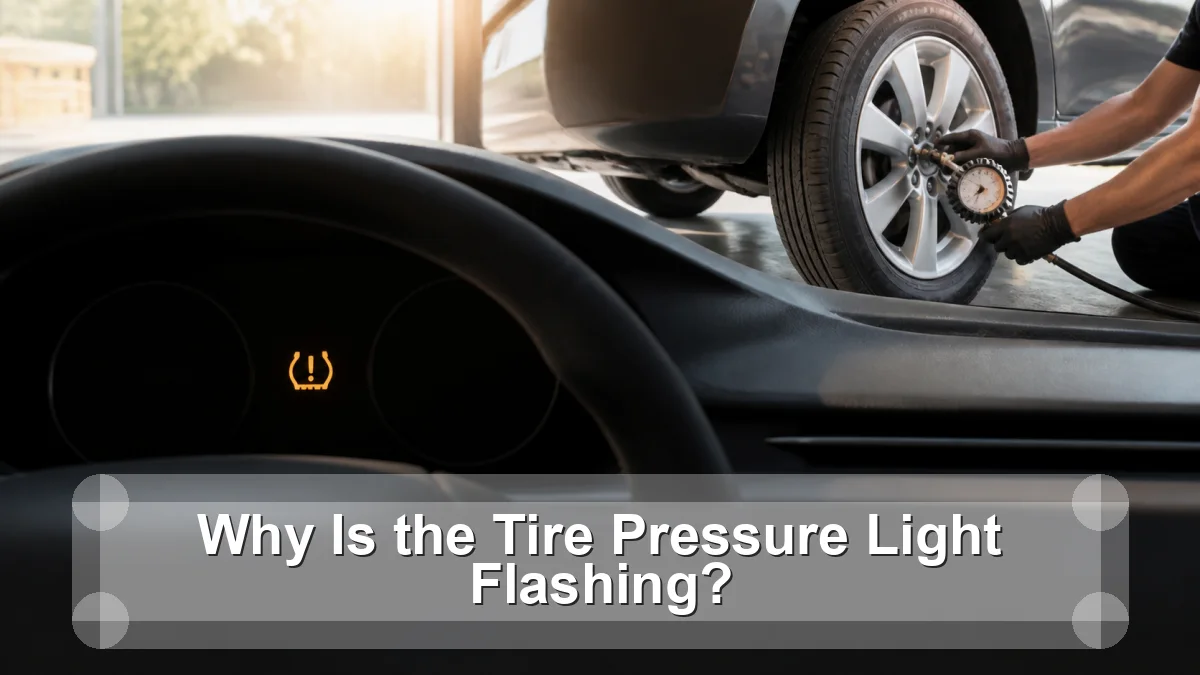
On U.S. light vehicles subject to the modern TPMS rule, a warning that flashes for roughly 60–90 seconds and then stays on indicates a system malfunction. A steady light indicates significant underinflation. Check all tires with a gauge first because a failed monitoring system cannot tell you whether pressure is safe.
This guide is a diagnosis and decision aid for a home-garage owner, not a claim that one symptom proves one failed part. Vehicle design, service limits, warning behavior, and test conditions vary, so the exact owner manual and service information remain the final authority.
Read the pattern before choosing a part
The fastest useful move is to describe what changed, when it happens, and what does not happen. The table below is a triage card: it narrows the next check but deliberately avoids turning a clue into a verdict.
| What you notice | What it suggests | Best next move |
|---|---|---|
| Steady lamp | At least one tire significantly underinflated | Check pressure now |
| Flashes 60–90 seconds then stays on | TPMS malfunction | Gauge tires and diagnose system |
| On cold morning then goes out | Marginal pressure may cross threshold | Correct cold pressure |
| Appears after wheel service | Sensor damage or relearn issue possible | Review service procedure |
| One sensor has no data | Battery, sensor, wheel, or communication fault | Scan-tool diagnosis |
Use several matching clues. One reading, one noise, or one dashboard lamp can be affected by temperature, recent service, battery state, road conditions, or the way the vehicle’s control system is designed.
A practical check sequence
- Read the pattern. Time the lamp at key-on. Do not call every illuminated TPMS symbol a low tire; steady and flashing behaviors carry different meanings.
- Check actual pressure. Use the placard cold values and a gauge on all road tires and the spare if monitored. The system warning does not replace measurement.
- Inspect tire condition. Look for puncture evidence, valve damage, bulges, cuts, bent wheels, and pressure that falls again after correction.
- Review recent changes. Rotation, new wheels, sensor replacement, seasonal sets, dead sensor batteries, and relearn procedures commonly explain a new malfunction sequence.
- Diagnose the system. A TPMS-capable scan tool and service information can identify sensor IDs, signal, battery status where supported, receiver, wiring, and relearn needs.
Write the observations down. A short record of conditions, readings, warning lamps, and recent work is more valuable to a technician than a replacement-part theory. If a test requires bypassing a safety system, opening a pressurized circuit, working near moving parts, or lifting beyond your equipment, stop at the observation stage.
Steady-versus-flashing TPMS action card
The table and ordered checks above form the article’s working value object. To use it, circle the row that most closely matches the complaint, complete the next check, then revise the hypothesis. A result that contradicts the first guess is progress: it prevents a good component from being replaced and keeps the real fault visible.
Add three lines to the worksheet: conditions (cold, hot, wet, speed, load), evidence (measurement, code, wear, leak, sound), and decision (safe to monitor, book inspection, or stop and tow). That simple structure makes the diagnosis repeatable without pretending every vehicle shares one specification.
Common wrong turns
The tempting shortcut
Resetting the warning without measuring pressure can hide an active safety problem. A safe repair plan should explain both the failed condition and the evidence that ruled out its closest look-alikes.
The misleading assumption
Inflating to the sidewall number instead of the placard creates another error. A safe repair plan should explain both the failed condition and the evidence that ruled out its closest look-alikes.
The incomplete repair
Replacing all sensors without scanning ignores indirect systems, receivers, and relearn faults. A safe repair plan should explain both the failed condition and the evidence that ruled out its closest look-alikes.
When to stop
If a tire is visibly low, damaged, bulging, or losing pressure rapidly, do not continue driving simply because the lamp is a system malfunction. Install the approved spare or arrange roadside help. The monitoring fault should be repaired because the automatic warning is unavailable or unreliable.
When the decision is “stop,” do not let schedule or convenience turn it back into “drive carefully.” Secure the vehicle away from traffic, use hazard warnings where appropriate, and arrange roadside or workshop help. Safety-critical faults can change faster than a symptom list suggests.
Related guides
- How to Check Tire Pressure Correctly: A Cold-Tire Routine
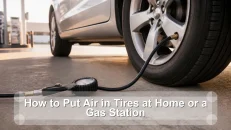
- How to Put Air in Tires at Home or a Gas Station
- Dashboard Lights Not Working?
These links are selected for the next safe decision rather than for keyword repetition. They cover the closest supporting check, tool, or workshop-safety step available before this article’s publication date.
Frequently asked questions
Can cold weather make the light flash?
Cold weather commonly lowers pressure and may cause a steady light or cycling. The defined flash-then-steady sequence indicates malfunction on applicable systems.
Will adding air fix a flashing light?
It fixes underinflation if present, but a malfunction still needs sensor, relearn, receiver, or system diagnosis.
Can I drive with a flashing TPMS light?
Measure the tires first. If pressure and condition are safe, base handling may be normal, but the monitoring system cannot be trusted until repaired.
Sources
- NHTSA TireWise: pressure, tread, aging, damage, and TPMS guidance
- NHTSA TPMS malfunction interpretation
Bottom line: On U.S. light vehicles subject to the modern TPMS rule, a warning that flashes for roughly 60–90 seconds and then stays on indicates a system malfunction. A steady light indicates significant underinflation. Check all tires with a gauge first because a failed monitoring system cannot tell you whether pressure is safe. Use the evidence path, respect the stop conditions, and confirm the exact repair against vehicle-specific information.