Category: Tires & Wheels
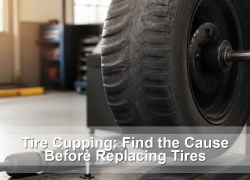
Cupping is a repeating high-low or scalloped wear pattern. The lost tread cannot be restored; the repair is to diagnose and correct the cause—often wheel/tire ...
READ MORE +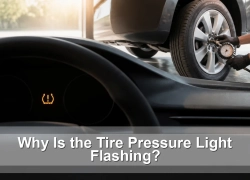
On U.S. light vehicles subject to the modern TPMS rule, a warning that flashes for roughly 60–90 seconds and then stays on indicates a system malfunction. A ...
READ MORE +
Match the vibration to its trigger. A shake in a narrow road-speed range often points toward tire or wheel imbalance or runout; pulsation only while braking ...
READ MORE +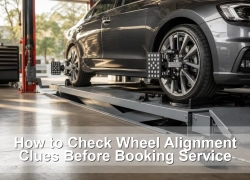
You can spot alignment clues—uneven or feathered tread, off-center steering wheel, repeatable pull on a level road, and recent impact—but a proper alignment ...
READ MORE +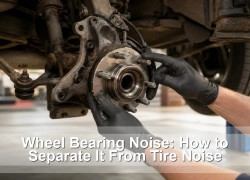
A failing wheel bearing often creates a hum, growl, or rumble that rises with road speed and may change when the vehicle’s load shifts in a gentle curve. ...
READ MORE +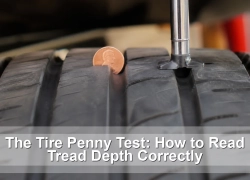
Insert a U.S. penny into a main tread groove with Lincoln’s head upside down. If the top of the head remains visible, that spot is at roughly the 2/32-inch ...
READ MORE +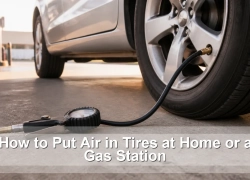
Find the vehicle’s cold-pressure target, measure each tire, add air in short bursts, and recheck with a trusted gauge. At an automatic pump, set the target ...
READ MORE +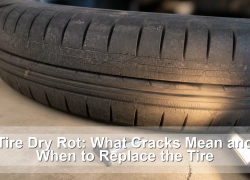
“Dry rot” usually describes weather checking and age-related rubber deterioration. Fine surface lines and deep cracks are not equivalent, but no photo or ...
READ MORE +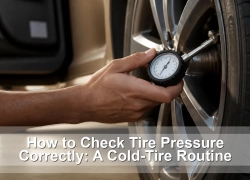
Check pressure when the tires are cold—before driving or after the vehicle has sat for at least three hours—and compare each reading with the driver-door ...
READ MORE +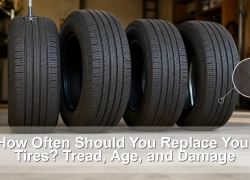
Replace a tire when tread reaches its legal or safe wear limit, when there is nonrepairable damage or exposed structure, when it will not hold pressure, or ...
READ MORE +