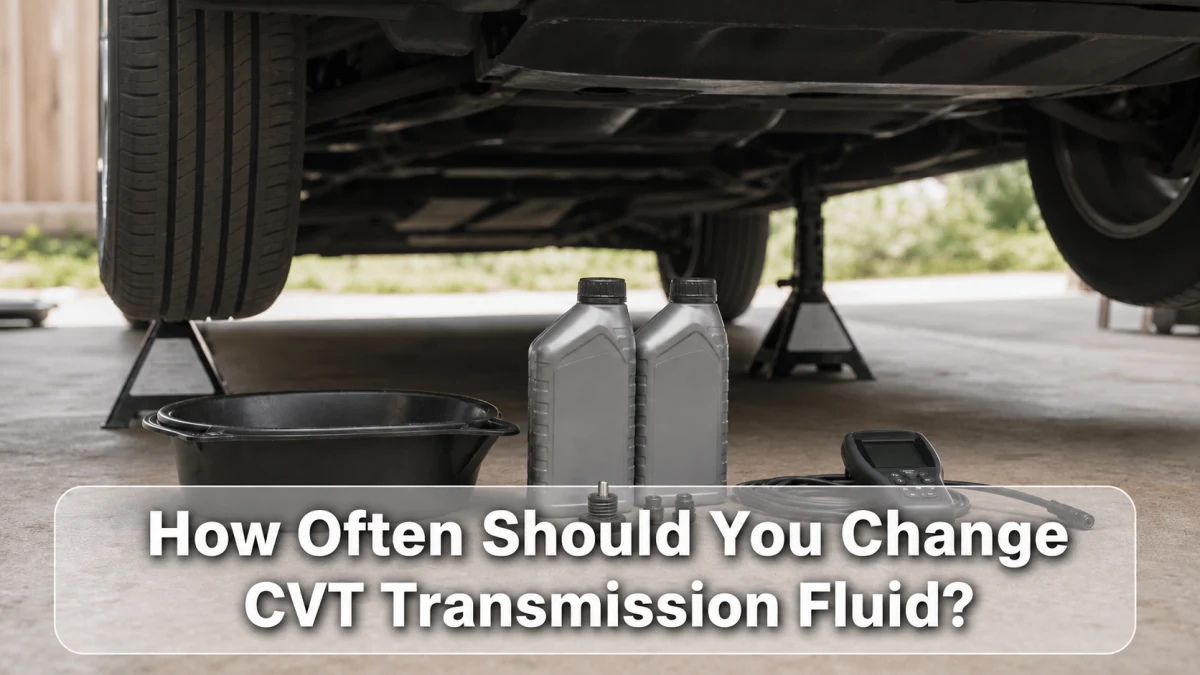
Change CVT fluid at the interval or maintenance-code trigger published for your exact transmission and driving conditions. There is no universal CVT mileage, and conventional automatic transmission fluid is not automatically compatible. Severe use can require earlier service, while the fill procedure may depend on fluid temperature and scan data.
Why CVT service varies
Continuously variable transmissions use different mechanical layouts and control strategies. Belt-and-pulley, chain, toroidal, and hybrid-integrated designs do not share one fluid or procedure. The oil may provide hydraulic control, cooling, bearing protection, and carefully tuned friction behavior.
Even within one brand, different model years and transmission codes can require different fluid. Decode the vehicle and check the transmission identification before buying supplies.
Owner-manual-first interval table
| Information you find | How to use it | What not to assume |
|---|---|---|
| Fixed time or mileage interval | Follow normal or severe line that matches use | That another model uses the same number |
| Maintenance minder code | Service when the code appears and follow reset instructions | That no code means fluid never needs service |
| Towing or mountain exception | Apply it when those conditions are met | That the normal interval still controls |
| Inspect-only language | Use the defined inspection and dealer/service information | That color alone sets the interval |
| No clear public interval | Consult current manufacturer service information | That a generic shop interval is factory guidance |
Conditions that can shorten the interval
Frequent towing, mountainous driving, repeated short trips, sustained heat, commercial stop-and-go use, sand or mud, and heavy loads can raise transmission temperature or cycling. Apply only the severe-use definitions the manufacturer gives, but describe your use honestly when planning service.
A transmission overheat event, cooler failure, water intrusion, incorrect fluid, or internal repair is not ordinary scheduled maintenance. It calls for immediate model-specific diagnosis.
Fluid condition is useful but not a mileage calculator
Dark or burnt-smelling fluid, debris, foaming, milkiness, or a low level can signal a problem. Color varies among new fluids and changes in service, so “red means good” and “brown means replace” are unreliable universal rules. A CVT can also have a sealed-looking arrangement without a dipstick; do not improvise a level check.
Jerking, shudder, delayed engagement, flare, noise, overheat warning, or reduced-power mode needs diagnosis. Fluid service may be due, but software, sensors, pressure control, mounts, engine performance, axles, or internal wear can produce overlapping symptoms.
Drain-and-fill versus machine exchange
A documented drain-and-fill removes a known portion and refills a measured amount before final level setting. Some procedures include filter, strainer, gasket, washer, calibration, or learned-value steps. A generic power flush can move debris, mix incompatible fluids, or apply a process the manufacturer does not approve.
Ask the service provider to name the exact fluid and procedure. “CVT compatible” marketing is not enough when the manual calls for a particular manufacturer specification.
Keep the invoice with the mileage, transmission code, fluid part number, quantity, and any filter or seal replaced. That evidence supports future diagnosis and helps the next technician avoid mixing an unidentified product.
Why level temperature matters
Transmission fluid expands as it warms. Some CVTs use an overflow standpipe or level plug that must be checked inside a narrow temperature range with the engine and selector in specified states. Too much fluid can foam or vent; too little can reduce hydraulic supply and cooling. If the procedure requires scan-tool temperature data or safe access under a running vehicle, professional service is the sensible choice.
Planning a correct CVT service
- Confirm the transmission code, fluid part number or approval, and capacity information.
- Read the full drain, refill, level, and maintenance-reset procedure.
- Inspect for leaks before service so a low level is not hidden.
- Measure drained fluid when the procedure supports comparison.
- Use clean dedicated pumps, funnels, and containers to avoid cross-contamination.
- Install specified seals and torque plugs with correct service values.
- Set the level under the prescribed temperature, engine, selector, and vehicle-level conditions.
- Road-test and recheck leaks, codes, and operation as directed.
Prepare with the fluid-change tool checklist. If access requires lifting, use rated stands and follow the floor-jack safety checklist; never work under a car held only by a jack.
Frequently asked questions
Is CVT fluid “lifetime” fluid?
Interpret that term only through the manufacturer’s current schedule, warranty definitions, and use conditions. It does not mean the fluid is immune to heat, contamination, leakage, or repair events.
Can I mix CVT fluids?
Do not assume interchangeability. Use the exact approved fluid and follow manufacturer guidance if the wrong product was added.
Should I change fluid if the CVT already slips?
Diagnose the symptom first. Correct level and fluid are important, but service cannot repair every mechanical or control fault and an incorrect procedure may complicate diagnosis.
Sources
- Honda owner’s manual: Maintenance Minder example
- Honda owner’s manual: CVT fluid specification and check guidance
- Cars.com: CVT maintenance overview
Bottom line: transmission identity, manufacturer schedule, use conditions, fluid approval, and level procedure decide when and how to service a CVT—not a universal mileage.