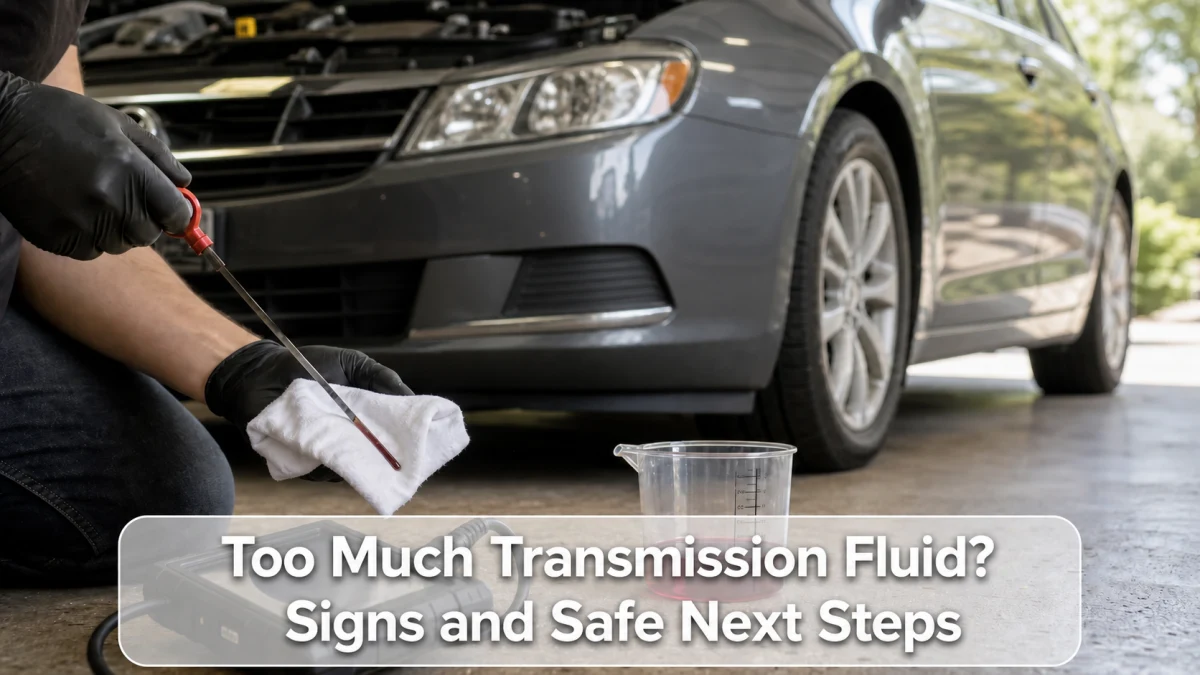
Too much transmission fluid can aerate, vent, leak, or disrupt hydraulic control, but the same symptoms occur with incorrect fluid, overheating, control faults, or internal wear. Confirm the level with the exact transmission procedure before removing anything. Many units require a narrow temperature range and have no dipstick.
Possible signs of overfill
Potential signs include foamy fluid on an applicable dipstick, fluid pushed from a vent, new leaks after service, erratic shifting, delayed engagement, overheating, or fluid contacting the exhaust. None is exclusive to overfill. A clogged vent, internal pressure fault, wrong fill temperature, worn seals, or existing transmission problem may look similar.
Overfill symptom and verification matrix
| Observation | Why overfill is possible | What else to rule out |
|---|---|---|
| Level above mark after service | Too much added or wrong check condition | Fluid too cold/hot, engine state, vehicle not level |
| Foam or bubbles | Rotating parts may aerate excess fluid | Low level drawing air, wrong fluid, cooler issue |
| Fluid at vent | Expansion space may be reduced | Overheat, blocked vent, internal failure |
| New pan or seal leak | Excess/foamed fluid may escape | Loose fastener, damaged seal, fluid tracking from above |
| Shift or engagement change | Aerated fluid can affect hydraulic operation | Control, electrical, pressure, or mechanical fault |
| Burnt odor or overheat message | Foaming can reduce cooling and lubrication | Low level, heavy load, cooler restriction, internal slip |
Why foaming matters
Hydraulic circuits are designed to move liquid, not a compressible air-and-oil mixture. Aeration can make pressure control unstable and reduce effective lubrication or cooling. It can also make a dipstick reading look high or inconsistent. Shut the vehicle down if operation changes rather than repeatedly cycling the selector.
How to get a valid level reading
Read the owner’s manual and service information. A dipstick procedure may specify a drive cycle, level ground, engine idling, selector movement, and a hot or cold scale. A sealed transmission may use a fill and overflow plug with fluid temperature read by a scan tool. Hybrid and dual-clutch designs can use entirely different steps.
- Confirm the transmission code and required fluid specification.
- Check for active leaks before interpreting the level.
- Bring fluid into the specified temperature range without driving if operation is unsafe.
- Set parking brake, wheel chocks, and selector state exactly as directed.
- Read the dipstick or overflow according to the service procedure.
- Repeat the check if the result is ambiguous; do not average unlike conditions.
A reading made with the engine off when it should be idling can appear very different. Likewise, a small temperature change can alter the overflow result. Precision matters more than speed.
Save the before-and-after temperature, level result, and quantity removed in the service record. If the reading later changes, those details help distinguish a leak from an initially invalid check.
Safe correction
If overfill is confirmed, remove fluid only by the documented drain, extraction, or level-plug method. Use clean dedicated equipment so dirt or incompatible fluid is not introduced. Measure what comes out, reinstall specified seals, torque plugs correctly, and repeat the full level check.
Do not loosen a random case bolt or crawl beneath a running vehicle without the required professional lift setup. Home lifting requires rated stands, correct points, firm level ground, and the floor-jack safety checklist.
Look-alikes that need different repairs
A low level can also foam as the pump draws air. Incorrect fluid can change friction behavior. A restricted cooler, failed thermostat or bypass, pressure-control solenoid, wiring issue, worn clutch, or software problem can cause heat or poor shifting. Read codes and evaluate the transmission before concluding that removing fluid will solve every symptom.
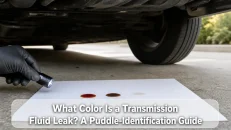
If a new puddle is the main clue, identify it with the transmission fluid color comparison, then trace the source. The upcoming parked-leak guide explains why fluid can appear well after shutdown.
After correcting the level
Clean spilled fluid, road-test only if operation is normal, and recheck the level and leaks under the same specified conditions. Scan for transmission codes and record the fluid quantity removed. If slipping, delayed engagement, venting, or overheating continues, stop driving and arrange diagnosis.
Frequently asked questions
Will excess transmission fluid burn off?
Do not count on it. Fluid may vent onto hot components, leak past seals, or remain overfilled. Confirm and correct the level safely.
Can a small overfill cause damage?
Tolerance and level procedure vary by transmission. A questionable reading should be repeated correctly; a confirmed level outside specification should be corrected rather than guessed safe.
Can I siphon fluid through the dipstick tube?
Only if service information permits a compatible extraction method. A tube can lodge, contamination can enter, and the final level still requires the full temperature-based check.
Sources
- Honda owner’s manual: transmission fluid check and specification example
- CarParts: transmission fluid change and level considerations
Bottom line: suspected overfill is a measurement problem before it is a drain problem. Verify the correct temperature and procedure, remove only a confirmed excess, and investigate symptoms that remain.