If a car takes unusually long to warm up, the cabin heater stays weak, and the temperature gauge runs cooler than it used to, the thermostat may be stuck open. That pattern is a clue, not a verdict: a faulty coolant-temperature sensor, a fan running constantly, cold weather, and some diesel or hybrid operating strategies can look similar.
What “stuck open” actually means
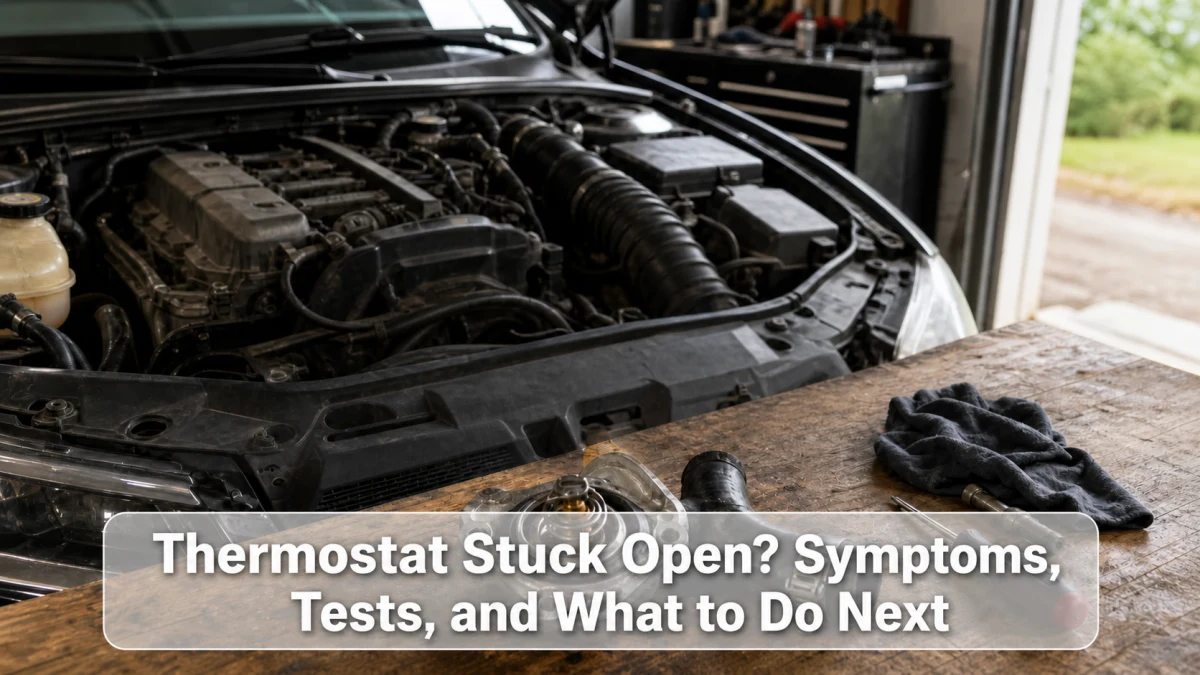
The thermostat is a temperature-controlled valve between the engine and radiator. When the engine is cold, it normally restricts coolant flow through the radiator so the engine can warm efficiently. As temperature rises, it opens and allows more heat to move into the radiator.
A thermostat that cannot close lets the radiator remove heat too early. The engine may still run, but it can warm slowly or fail to reach the temperature the engine computer expects. HELLA’s cooling-system diagnostic guide treats “engine does not warm up” as a reason to check whether the thermostat remains open, while also checking the displayed temperature and a fan that may be running continuously.
Stuck-open thermostat symptom pattern
| What you notice | Why it fits | What else can cause it |
|---|---|---|
| Gauge rises slowly | Coolant reaches the radiator too early | Cold weather, inaccurate sensor or gauge |
| Gauge stays lower than its previous normal | Engine loses heat faster than intended | Fan commanded on, sensor circuit fault |
| Cabin heat is weak on the highway | Heater core receives cooler coolant | Low coolant, restricted heater core, blend-door fault |
| Fuel economy drops | The engine may spend longer in warm-up strategy | Tire pressure, weather, short trips, unrelated engine faults |
| A thermostat-rationality code appears | Warm-up did not match the computer’s expectation | Coolant sensor, wiring or cooling-fan fault |
The most useful evidence is a combination of symptoms. Weak heat alone is not enough, and a single gauge reading is not enough.
A cold-start check you can do without opening the system
- Let the engine become fully cold. Overnight is simplest. Do not open a warm radiator or expansion-tank cap.
- Check the reservoir level from outside. Use the marks and coolant instructions in the owner’s manual. Low coolant needs attention before thermostat conclusions.
- Start the engine and note ambient conditions. A car warms more slowly at 15°F than at 70°F, especially with the heater on high.
- Watch the gauge during a familiar route. Look for a repeatable change from the vehicle’s previous behavior, not a universal number.
- Observe the radiator fan. A fan that runs hard immediately on a cold engine can keep temperatures low and may indicate a sensor, relay, control, or fail-safe issue.
- Use scan data if available. Before startup, reported coolant temperature should be plausible relative to the cold engine and surrounding air. Exact tolerances come from service information.
Do not reach around belts or fans while the engine runs. Electric cooling fans can start without warning.
How to separate the common look-alikes
Coolant-temperature sensor problem
An implausible sensor can make the gauge or scan reading look too cold even when the engine is warm. HELLA recommends checking stored faults, the connector and wiring, and manufacturer-specific resistance values. If scan temperature jumps suddenly instead of changing smoothly, investigate the signal before blaming the thermostat.
Cooling fan runs all the time
A stuck relay, commanded fail-safe operation, or another control fault can keep airflow high across the radiator. The result may resemble an open thermostat. Fixing the thermostat will not correct a fan-control problem.
Low coolant or poor heater flow
Low coolant can reduce heater output and may cause unstable temperature readings. A restricted heater core or temperature-blend door can also produce weak cabin heat while engine temperature remains normal.
Can you keep driving?
A stuck-open thermostat is usually less immediately dangerous than one stuck closed, but it should not be ignored. Confirm that the car is not losing coolant, overheating, misfiring, or showing a red temperature warning. If temperature becomes unstable, steam appears, or coolant is escaping, stop safely and arrange an inspection.
When the only pattern is slow warm-up and consistently low operating temperature, schedule diagnosis rather than guessing at parts. Prolonged cold running can hurt efficiency, cabin comfort, emissions control, and oil’s ability to shed moisture.
Repair decision
Replacement is reasonable after the warm-up pattern, sensor plausibility, fan operation, and coolant level have been checked. Use the exact thermostat specification, sealing method, coolant type, bleeding procedure, and torque values for the vehicle. Some thermostat housings include sensors or electronically controlled elements, so a generic removal video is not enough.
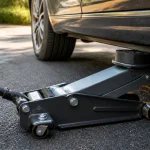
If inspection requires lifting the vehicle, locate the approved lift points first and follow the site’s floor-jack safety checklist. Never work beneath a vehicle supported only by a jack.
Frequently asked questions
Can a stuck-open thermostat trigger a check-engine light?
Yes. Some vehicles monitor warm-up performance and can store a thermostat-rationality code when coolant temperature does not rise as expected. Sensor, wiring, fan, and low-coolant faults must still be considered.
Will the upper radiator hose warm immediately?
Hose temperature can be a clue, but it is not a universal pass/fail test. Bypass circuits and thermostat layouts vary, and touching hot or moving engine components is hazardous. Use model-specific service information.
Does weak cabin heat always mean the thermostat is open?
No. Low coolant, air in the system, a restricted heater core, a heater-control valve, or a blend-door problem can all reduce heat.
Sources
- HELLA: cooling-system troubleshooting and thermostat checks
- HELLA: coolant-temperature sensor testing
Bottom line: suspect a stuck-open thermostat when slow warm-up, low gauge behavior, and weak heat appear together. Verify the coolant level, sensor reading, and fan behavior before replacing anything.