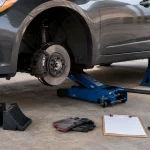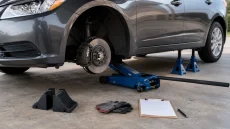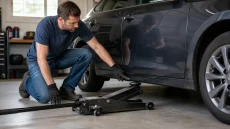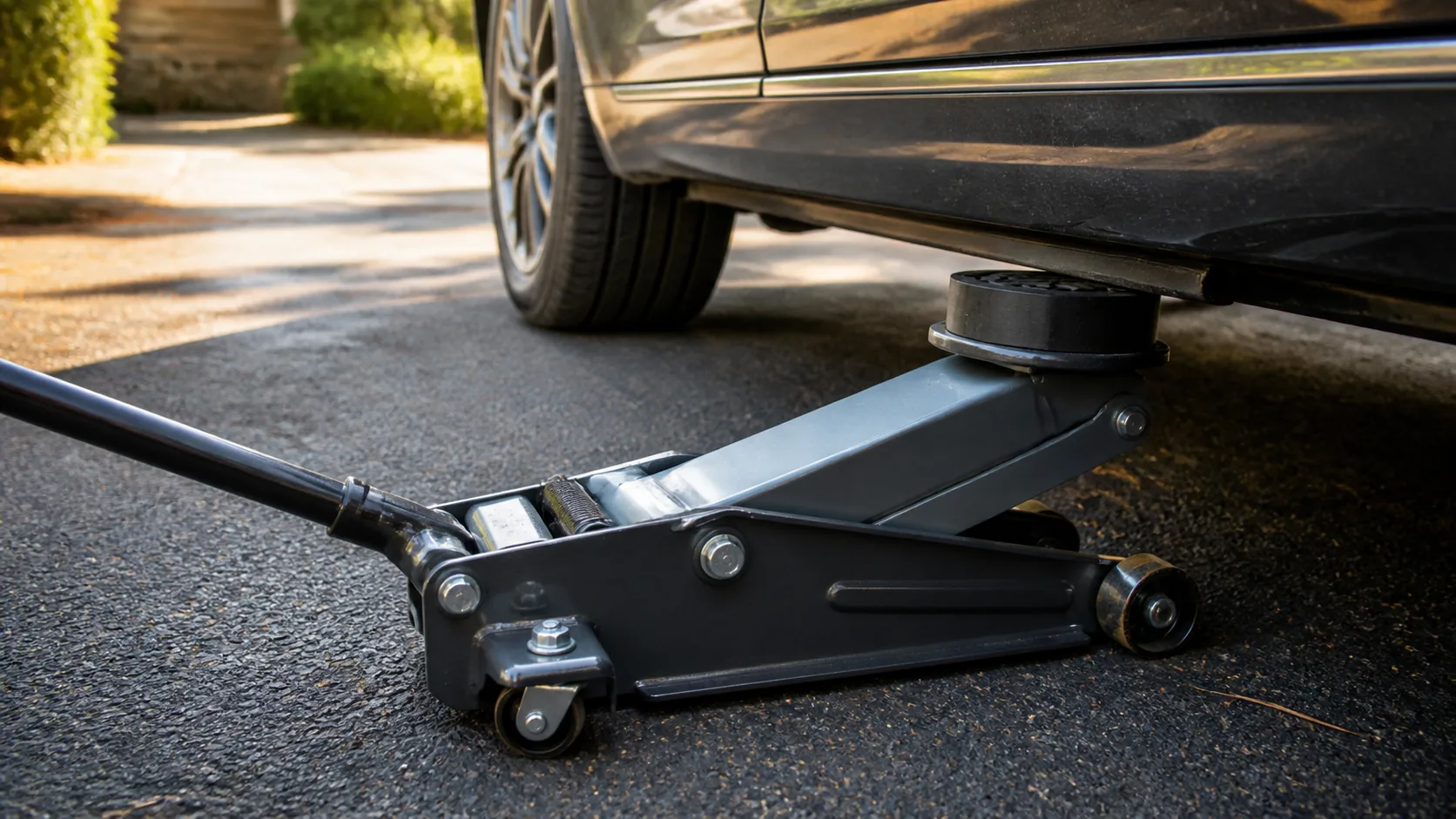
Asphalt may feel solid under your shoes and still behave badly under a concentrated load. Heat softens it, small jack wheels focus pressure into tiny areas, and a stand foot can sink or tilt without much warning.
That makes an asphalt driveway a poor default location for vehicle lifting, especially during warm weather or for work that puts a person underneath.
Quick answer: Use a sound, level concrete surface whenever possible. If an emergency forces a brief lift on asphalt, keep people out from under the vehicle and use manufacturer-approved, purpose-made load-spreading equipment on firm, cool, intact pavement. Never assume a scrap board makes long-duration support safe.
Why asphalt is different from concrete
Asphalt is a flexible pavement made to carry rolling tire loads over a broad contact patch. A jack caster or stand foot creates a much smaller, stationary pressure point. On a hot day, that point can leave a depression, causing the jack to stop rolling or a stand to lean.
Old, cracked, freshly laid, or oil-softened asphalt is even less predictable. A setup that appears stable for a tire change may move as the load remains in place.
The safest practical options
First, relocate the vehicle to a level concrete garage floor, service bay, or other surface approved for lifting. For a roadside problem, professional assistance may be safer than improvising. If the vehicle must be lifted briefly, follow its emergency-jack instructions and keep every person out of the underbody area.
Purpose-made steel or engineered load-spreading plates can reduce point pressure, but they do not correct a slope, weak pavement, damaged equipment, or a misplaced lift point.
How to assess the location
Look for slope, cracks, soft patches, repaired seams, loose grit, standing water, and recent heat exposure. Press a heel or tool against a hidden edge to see whether the surface marks unusually easily. Check that a plate would sit fully flat rather than bridge a depression.
If any part of the setup can rock, sink, or slide, do not lift there. The right decision is often to postpone the repair until the vehicle can be moved.
If you are changing a tire
Move as far from traffic as safely possible, switch on hazards, follow the manual, chock the appropriate wheel, and loosen fasteners only as directed. Raise the vehicle no higher than needed to remove the tire. No one should place any part of the body beneath it.
Finish promptly, lower carefully, and arrange a proper torque check. Emergency roadside lifting is not a substitute for a stable workshop setup.
Common mistakes to avoid
- Using thin plywood that can split, flex, or become slippery.
- Leaving a vehicle on stands over asphalt for hours or overnight.
- Ignoring the jack wheels as long as the saddle looks centered.
- Treating cool-morning stability as proof the surface will remain stable in afternoon heat.
Safety reminder for floor jack on asphalt: the jack raises the vehicle; it does not replace a support stand. Except for the limited roadside wheel-change procedure described by the vehicle maker, transfer the load to correctly rated stands before any part of your body enters the under-vehicle danger zone.
Frequently asked questions
Will a thick board make asphalt safe for jack stands?
A random board is not a guaranteed support system. It can crush, split, rock, or hide pavement movement. Prefer concrete or engineered equipment.
Is asphalt safer in winter?
Cool asphalt is generally firmer, but cracks, slope, moisture, and concentrated loading still matter. Concrete remains preferable.
Can I crawl under the car for a quick check?
Not when the lifting surface or support setup is questionable, and never with only a jack supporting the vehicle.
Related guides
- Floor Jack Safety Checklist: Before, During, and After Lifting
- Choose Best Portable Floor Jack
- What Size Floor Jack Do I Need? 2-Ton vs 3-Ton vs 4-Ton
- How to Find the Correct Jacking Points on Any Car
Final thoughts
Asphalt is a surface to avoid for planned under-car work. The inconvenience of moving to sound concrete is small compared with the consequence of a caster sinking or a stand leaning.
Source note for floor jack on asphalt: this guide was checked against UK HSE vehicle-lifting safety guidance. Use that safety context together with the instructions, limits, and lift points published by your vehicle and equipment manufacturers.