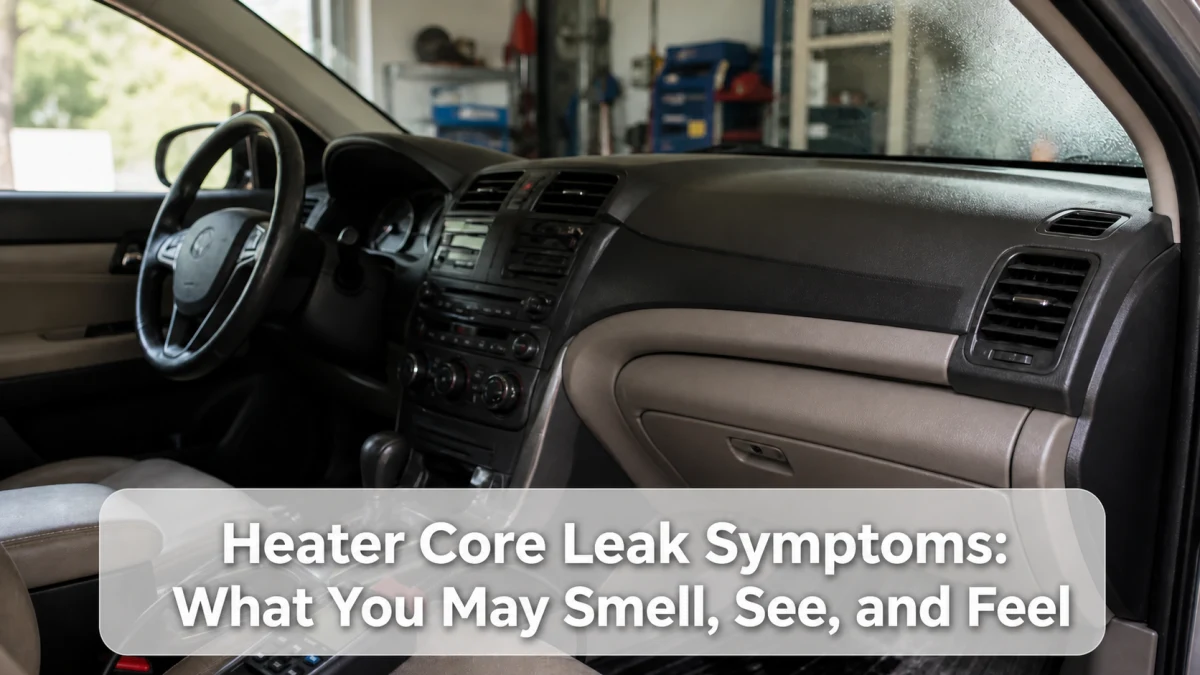
A leaking heater core often leaves clues inside the cabin: a sweet coolant odor, greasy film on the windshield, damp carpet near the HVAC case, or unexplained coolant loss. It can also reduce heat or make the windows fog. None of those clues is unique, so the useful question is whether the evidence begins inside the HVAC housing or is being carried in from somewhere else.
What the heater core does
The heater core is a small heat exchanger inside the HVAC housing. Hot engine coolant flows through it, and the blower moves cabin air across its fins. A temperature door then controls how much warmed air reaches the vents on many vehicles.
A leak can occur in the core, its tubes, seals, control valve, or nearby hose connections. Because much of the assembly is hidden behind the dashboard or firewall, coolant may travel before it becomes visible.
Cabin-side versus engine-side leak locator
| Observation | More likely area | Next check |
|---|---|---|
| Wet carpet with coolant odor | HVAC case, core, tube seals, or connections | Trace upward; confirm liquid is coolant |
| Coolant at firewall hose connection | Heater hose, clamp, fitting, or tube | Inspect cold and pressure-test to specification |
| Clear water under passenger side after AC use | Normal evaporator condensation | Check odor, color, feel, and whether coolant level changes |
| Windshield fogs with oily-looking film | Possible coolant vapor from HVAC case | Compare with ordinary humidity and cabin moisture |
| Weak heat without coolant loss | Restriction, air pocket, low engine temperature, or door fault | Check engine warm-up and heater-hose temperatures professionally |
What you may smell
Engine coolant commonly has a sweet or chemical odor, but smell is subjective and products differ. The key is a new odor that follows heater or defroster use and accompanies coolant loss, film, or dampness. Exhaust odor, mildew, washer fluid, and spilled coolant in the engine bay can enter the fresh-air intake and imitate an internal leak.
What you may see
Look for residue around heater-hose connections only when the engine is cold. Inside, inspect carpet edges and the lower HVAC case with a light. Do not assume every passenger-side puddle is coolant: clear, odorless water after air-conditioning operation is normally condensate.
A recurring greasy film on the inside of the glass is more suspicious when it appears with coolant odor. Clean the glass first so you can tell whether the film returns.
What you may feel
Carpet padding can hold liquid while the surface feels only slightly damp. Press a clean white paper towel into the suspected area, then compare the color and odor with the coolant in the reservoir without touching or opening a hot system. Wear gloves and keep coolant away from children and animals.
Leak or clog?
A leaking heater core loses coolant. A restricted core may deliver weak or uneven heat without losing fluid. Both problems can exist together if contaminated coolant has corroded or blocked the core.
A shop may compare inlet and outlet temperatures, verify engine temperature, check the blend-door command, and pressure-test the cooling system. Those steps prevent replacing a heater core when the real problem is a thermostat, low coolant, an air pocket, or an HVAC door actuator.
Can you drive with a heater-core leak?
The safest answer depends on leak rate and visibility. Do not drive if the windshield will not stay clear, coolant is actively entering the cabin, the temperature warning appears, the engine overheats, or the reservoir is rapidly emptying. Arrange a tow.
A tiny confirmed seep with stable temperature may allow time to schedule repair, but coolant loss can accelerate. Check the level only when cold and follow the owner’s manual. A heater-core bypass is a vehicle-specific temporary repair that removes cabin heat and defrost performance; it is not appropriate in conditions where heat is required for visibility.
Repair choices
Some vehicles require substantial dashboard disassembly, while others provide limited service access. Replacement should include the specified seals, correct coolant, proper bleeding procedure, and an inspection of hoses and connectors. Chemical stop-leak products can restrict small passages and complicate later repair, so use them only if the vehicle manufacturer explicitly approves one for the exact application.
If you need to inspect beneath the vehicle for coolant tracking, use the manufacturer-approved jacking points and follow the complete lifting safety checklist.
Frequently asked questions
Can a heater-core leak cause overheating?
Yes, if enough coolant is lost or air enters the system. The leak may start in the cabin, but the engine still depends on the same cooling-system inventory.
Why does the windshield fog when I use defrost?
A leaking core can add coolant vapor and film, but wet carpet, high cabin humidity, a blocked cabin-air path, or recirculation settings can also fog glass. Coolant odor and fluid loss strengthen the heater-core diagnosis.
Is a clear puddle under the passenger side a heater-core leak?
Often it is normal AC condensate. Coolant usually has color or residue and a distinct odor, and its loss should eventually show at the reservoir. Confirm before repairing.
Sources
- HELLA: vehicle heating and cooling-system diagnosis
- Tires Plus: heater-core leak and restriction overview
Bottom line: coolant odor plus returning windshield film, damp HVAC-area carpet, or unexplained coolant loss makes a heater-core leak plausible. Confirm the liquid and its source before authorizing dashboard-level repair.